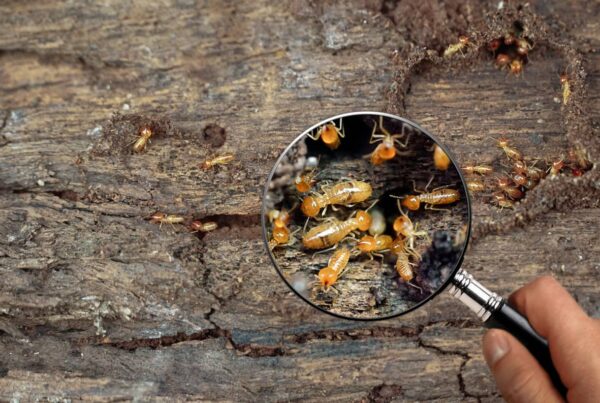
Flying termites, also known as alates or swarmers, are the reproductive members of a termite colony. They appear when a colony is mature enough to expand, flying out to find a new location to start new colonies of their own. If those termite swarmers are showing up inside your home or right along your foundation, that is a signal worth taking seriously.
Here in Brevard County, termite swarms are not rare. The warm, humid climate along the Space Coast creates near-perfect conditions for termite colonies to grow and spread.
Whether you live in Melbourne, Viera, Rockledge, or closer to the coast in Satellite Beach or Indian Harbour Beach, flying termites are a seasonal reality homeowners deal with every year.
This guide walks you through what winged termites look like, when and why they swarm, how to tell them apart from flying ants, and what to do if you spot them.
What Are Winged Termites?
Winged termites are not a separate species. They are the reproductive caste within a termite colony, and they are the only termites that grow wings.
Why Termites Develop Wings
Every termite colony produces swarmers or alates for one purpose: to leave the nest, mate, and start a new colony. Once they land and find a suitable location, they shed their wings.
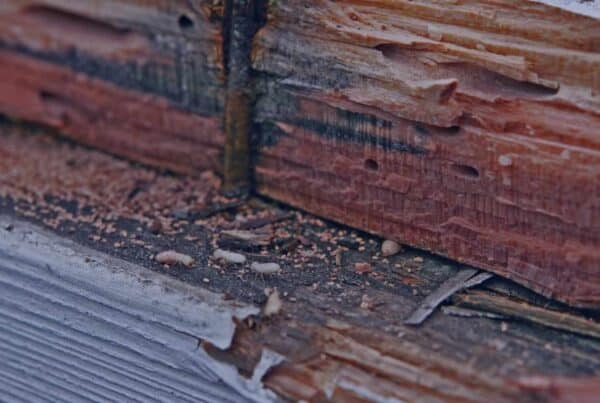
Piles of discarded wings near window sills, doorways, or baseboards are often the first visible sign that termite swarms have occurred nearby.
Signs of Swarming Near Your Home
- Small flying insects gathering near windows or light fixtures
- Piles of shed wings on sills, in corners, or along baseboards
- A brief indoor swarm, often lasting less than an hour, following warm rain
- Winged insects are attracted to light on warm evenings
Not every swarm means termites are inside your walls. But it does mean a mature colony is close by, and that warrants attention.
What Do Termites With Wings Look Like?
Termite swarmers are commonly mistaken for flying ants. Knowing the difference helps you respond appropriately.
Termites have two pairs of wings that are equal in size, while flying ants have front wings that are larger than their hind wings. Termite wings are also longer than their body and have a milky or translucent appearance.
Here is a quick comparison:
| Feature | Termite Swarmer | Flying Ant |
|---|---|---|
| Body Shape | Thick, no pinched waist | Narrow waist (hourglass shape) |
| Antennae | Straight, beaded antennae | Bent antennae (elbowed) |
| Wings | Four wings, equal in size | Front wings larger than hind wings |
| Wing Appearance | Milky, translucent wings | Clearer, more veined |
| Size | ~¼ to ⅜ inch | Varies, often similar |
The easiest field test: look at the waist. Termites have a thick body with no pinch. Winged ants have a narrow waist. If you are still unsure, proper identification by a pest control professional removes any guesswork.
Do All Termites Have Wings?
No. Only the reproductive caste develops wings. Worker termites and soldier termites are wingless and never leave the colony.
Termites undergo incomplete metamorphosis through three main stages: egg, nymph, and adult. The caste each termite develops into, worker, soldier, or reproductive, is determined during the nymph stage.
Here is how the three castes break down:
- Workers: Wingless, creamy white, and small. These are the termite workers eating wood around the clock and causing the majority of structural damage.
- Soldiers: Wingless, with larger heads and darker mandibles. Their role is to defend the colony.
- Swarmers (Alates): The only winged reproductives. They leave to mate and establish new colonies. These are the future kings and queens of next season’s termite colonies.
When you see winged termites, you are seeing the colony’s reproductive members, not the ones doing the daily damage. The termite workers causing harm are already deeper inside your structure.
When Do Termites Swarm in Florida?
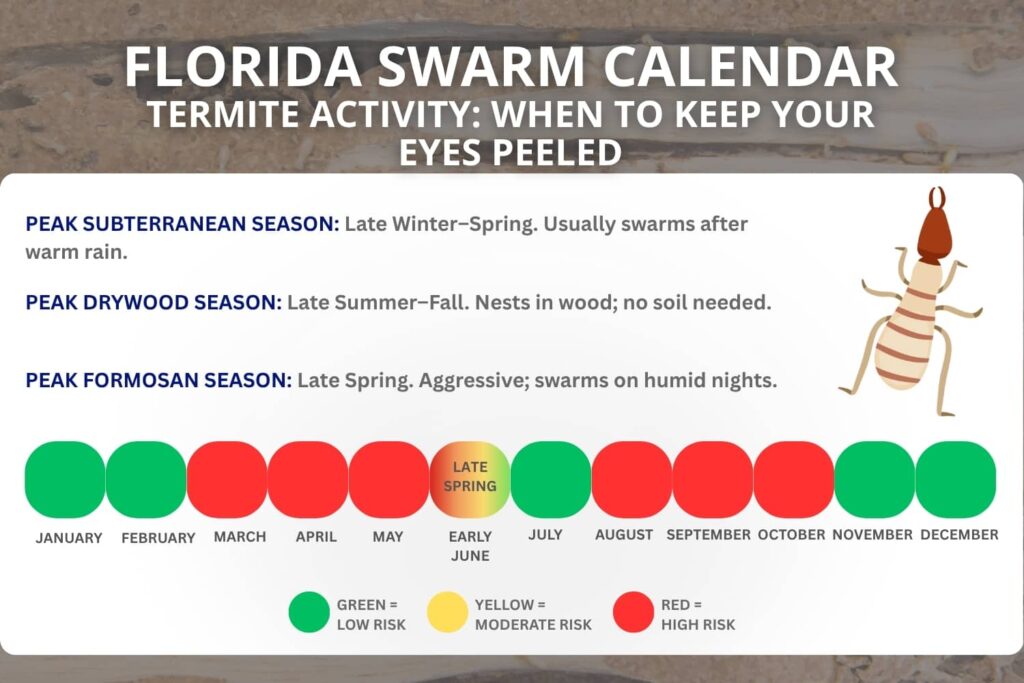
Florida’s mild winters mean termite activity continues nearly year-round, and termite swarms can occur from late winter through early fall. Peak windows vary by species:
- Subterranean termites (including the eastern subterranean termite) swarm most actively in late winter through spring, often triggered by warm temperatures following heavy rain.
- Drywood termites typically swarm later, from late summer through early fall. Drywood termites live inside the wood they infest and do not require contact with moist soil.
- Formosan termites, one of the most aggressive termite species found in Florida, swarm on warm, humid evenings, often in late spring.
In Brevard County, swarming season tends to peak between March and May for subterranean species. Most swarms last 30 to 60 minutes, which is why many homeowners only discover them after finding discarded wings.
Winged Termites Inside vs. Outside Your Home
Where you spot the swarmers matters.
- Swarmers found outside near a tree stump, wood pile, or fence likely indicate a colony living outside your home. Still worth monitoring, but not an immediate emergency.
- Swarmers found inside near windows, bathrooms, or baseboards are a more serious warning sign. Flying termites do not travel far. If they are inside, the colony producing them is almost certainly nearby, possibly already inside your walls, crawlspace, or under your slab.
Finding discarded wings indoors, even without seeing live swarmers, means swarming has already occurred.
The insects have moved on, shed their wings, and may be starting a new nest right inside your home. Termites fly briefly, then disappear. The damage they leave behind does not go away on its own.
Should You Be Worried If You See Flying Termites?
Seeing flying termites is not a cause for panic, but it is a cause for action. Here is how to gauge the situation:
- Outside, near wood debris or a stump: Monitor and schedule an inspection soon.
- Outside but near your foundation: Schedule an inspection promptly.
- Inside your home, near windows or light fixtures: Schedule an inspection right away.
- Inside repeatedly, or finding piles of wings indoors: Treat this as an active concern and call a pest control professional immediately.
Termite damage is rarely covered by homeowners’ insurance. A termite inspection costs far less than structural repairs, making early detection one of the smartest investments a homeowner can make.
Pest control companies that specialize in termites can confirm activity and walk you through a treatment plan before things get worse.

Other Questions Homeowners Ask
How do I know if I have termites or ants?
The two are often confused, especially during swarming season. Beyond the physical differences covered above, the damage they cause is a key distinguisher.
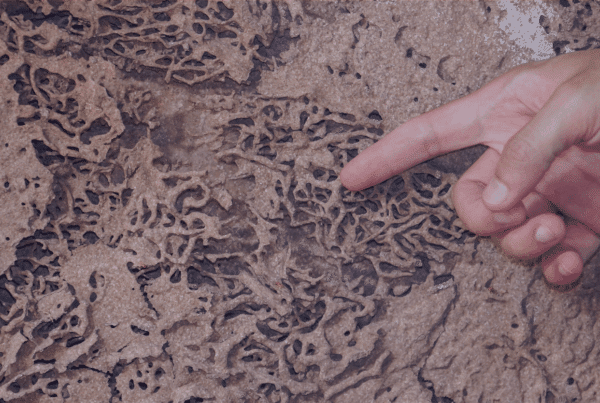
Termites eat wood from the inside out, leaving hollow-sounding structures and mud tubes behind.
Ants excavate wood but do not consume it, and their damage tends to look more like sawdust trails and galleries near the surface.
A professional inspection can confirm which pest you are dealing with and how far the activity has spread.
What happens during a termite inspection?
A thorough termite inspection covers the exterior foundation, interior baseboards and door frames, crawlspaces, attic access points, and any moisture-prone areas.
The inspector looks for live activity, mud tubes, frass, hollow wood, and conditions that make the home vulnerable.
After the inspection, you receive a written report with findings and, if needed, recommended treatment options.
What termite treatment options are available?
Treatment depends on the termite species and the extent of the activity. Subterranean termites are commonly treated with in-ground baiting systems like Sentricon, which targets the colony over time.
Drywood termites may require localized or whole-structure treatments. A pest control professional will identify the species first and recommend the most effective approach based on your specific situation.
Is termite damage covered by homeowners’ insurance?
Generally, no. Most standard homeowners’ insurance policies exclude termite damage because it is considered a preventable maintenance issue rather than a sudden loss.
This is one reason annual termite inspections and proactive pest control are so important for Florida homeowners. Catching activity early keeps repair costs manageable.
Can termites affect a home inspection report?
Yes. Wood-destroying organism inspections, commonly called WDO or termite inspections, are a standard part of the home-buying process in Florida.
Active termite activity, evidence of prior damage, or conducive conditions can all appear in the report and affect negotiations between buyers and sellers. Many buyers schedule a termite inspection alongside their general home inspection to get a complete picture of the property.
When to Call a Professional
Schedule a professional termite inspection any time you:
- See flying termites or find discarded wings inside your home
- Notice mud tubes along your foundation, in a crawlspace, or in your garage
- Hear hollow sounds when tapping wood trim or door frames
- Spot paint bubbling or wood that feels soft without a clear cause
- Are buying or selling a home
- Have not had a thorough inspection in the past year
In Melbourne and across Brevard County, annual termite inspections are one of the most practical things a homeowner can do.
The Space Coast’s humidity levels and warm temperatures year-round mean termite pressure never fully lets up. Homes near the Indian River, coastal communities like Cocoa Beach and Satellite Beach, and properties with older wooden structures face particularly elevated risk.
At Honor Services, termite inspections cover your full exterior foundation, interior living spaces, crawlspaces, and moisture-prone areas.
If termites are found, you will get a clear report with findings and straightforward options, whether that means Sentricon, other termite control methods, or a preventive treatment plan going forward.
Conclusion
So, do termites have wings? Some do. The reproductive members of a termite colony, called swarmers or alates, grow wings to leave the nest and establish new colonies.
Spotting them outside is worth monitoring. Spotting them inside your home is worth acting on quickly.
Florida’s climate makes termite activity a year-round reality. Early detection makes a real difference in protecting your home and avoiding costly structural damage.
Honor Services serves homeowners across Melbourne, Viera, Rockledge, Cocoa, Merritt Island, Palm Bay, Titusville, Satellite Beach, Indian Harbour Beach, Indialantic, Sebastian, Vero Beach, and surrounding Brevard County communities. Schedule your service today with the Honor team!