If your insurance company has requested a roof certification, you are not alone. Homeowners across the Space Coast in Melbourne, Viera, Rockledge, and Titusville are getting the same request. Is this the same as a regular roof inspection? Do you need a full replacement? Could your coverage be at risk?
A roof certification is an official document issued by a licensed roofing professional or certified roof inspector that confirms a roof’s condition and estimates its remaining lifespan. It is not a full home inspection, and it does not automatically mean your roof needs replacing.
But in Florida’s current insurance climate, it is one of the most important documents tied to your property. Understanding what it covers, when you need it, and why it matters can protect your coverage, your home sale, and your peace of mind.
What Is a Roof Certification?
A roof certification is an official document issued by a licensed roofing professional or certified roof inspector that confirms a roof’s condition and estimates its remaining lifespan. Insurers, buyers, and lenders use this certification to assess a property’s eligibility for coverage, financing, or sale.
While all roof certifications are based on a comprehensive roof inspection, which identifies issues like leaks, damage, and structural problems, not every inspection results in certification. A roof certification provides a professional guarantee of the roof’s quality and expected performance, typically valid for one to five years.
In Florida, certifications must demonstrate at least five years of remaining useful life. If the roof falls short, repairs by qualified professionals can often bring it up to standard without requiring full replacement.
Why Florida Homeowners Are Hearing About This
Florida’s homeowners’ insurance market has been under significant pressure. Insurers have tightened requirements and scrutinized roofing systems more aggressively because roofs are the single biggest source of claims in the state.
Damage from high winds, rain, and hail takes a measurable toll, especially in coastal Brevard County.
| Situation | What Insurers Typically Require |
|---|---|
| Roof under 15 years old | Generally insurable without certification |
| Roof 15+ years old | Proof of 5+ years of remaining useful life |
| No permit on file to verify roof age | Certification required regardless of estimated age |
| Shingle roof 25+ years old | Certificate or proof of replacement (Citizens Insurance) |
| Tile or metal roof 50+ years old | Certification required by Citizens Insurance |
Even if your roof appears to be in good condition from the street, age alone can trigger a non-renewal. Acting before your deadline gives you options. Waiting eliminates most of them.
What the Certification Process Covers
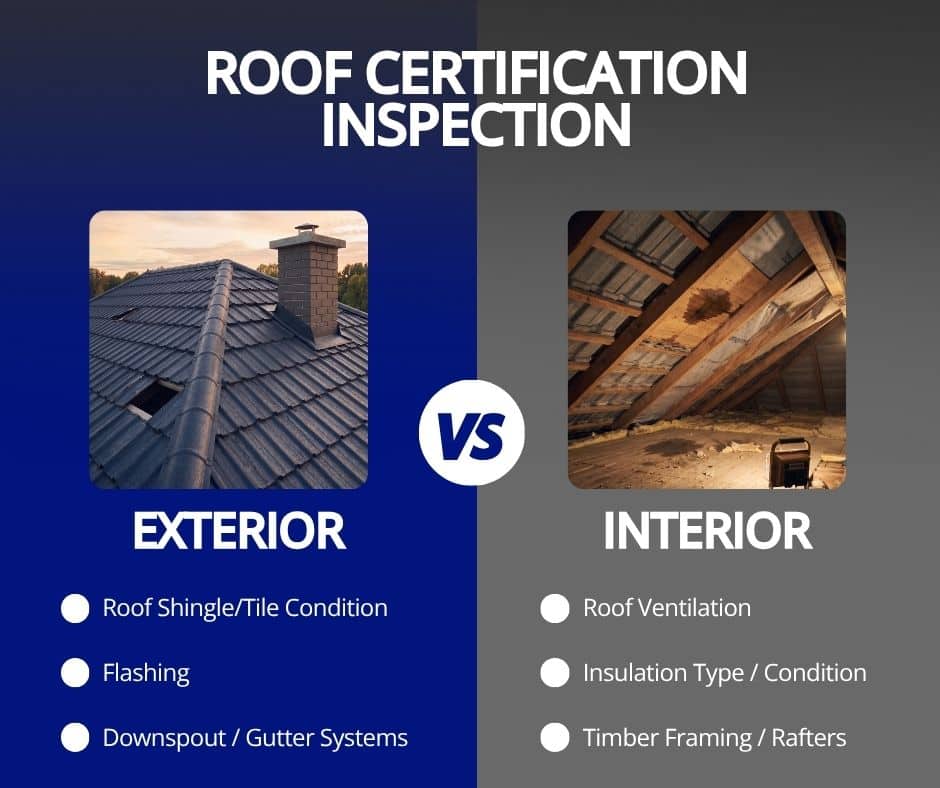
The certification process involves a thorough inspection of the roof’s structure, shingles, underlayment, and gutters to confirm they are in good condition. Here is what a certified roof inspector evaluates:
- Roofing materials and shingles: Checked for missing, curling, cracked, or deteriorating material. Granule loss on asphalt shingles is one of the most common signs of roof damage on aging roofs in Florida.
- Structural integrity: Signs of sagging, soft spots, or wood rot are noted, as these directly affect whether the roof can be certified by a licensed roofing contractor or inspector.
- Flashing, skylights, and seals: Checked for corrosion, lifting, or gaps that could allow water damage around chimneys, vents, and skylights.
- Gutters and drainage: Poor drainage accelerates wear and can lead to water intrusion. Blocked gutters are flagged as part of every professional assessment.
- Attic-side evidence: Water stains, mold, or daylight visible through the decking are red flags that affect certification outcomes.
Based on this assessment, the inspector issues a signed report estimating the remaining useful life and confirming whether the roof is in good condition. That certificate is what gets submitted to your insurer, lender, or prospective buyers.
Roof Certification vs. Other Inspections
A Roof Certification focuses entirely on the roof, documenting the roofing system’s condition, structural integrity, and estimated remaining useful life. Required when insurers or buyers need proof of roof condition.
A Four-Point Inspection covers four systems: roofing, electrical, HVAC, and plumbing. The roofing portion covers similar ground as a roof certification, but is part of a larger report. Most insurers require one for homes 15 years or older.
A Wind Mitigation Inspection evaluates your home’s ability to withstand high winds. It covers roof shape, deck attachment, roof-to-wall connections, secondary water resistance, and opening protection. This inspection can qualify your home for meaningful premium discounts.
| Inspection Type | Primary Purpose | Insurance Impact |
|---|---|---|
| Roof Certification | Confirms remaining roof life | Required for coverage eligibility |
| Four-Point Inspection | Evaluates 4 major home systems | Required for policy issuance/renewal |
| Wind Mitigation | Documents storm-resistant features | Can reduce your premium significantly |
All three can often be bundled into a single visit. Honor Services is a one-stop shop for all three across the Space Coast.
Several Reasons You May Need a Roof Certification
- Your insurer requested one. Schedule promptly to avoid a coverage lapse before your renewal deadline.
- You are buying or selling a home. Roof certifications are often required during real estate transactions to assure prospective buyers of the roof’s condition and prevent unexpected costs after purchase. A current certificate can prevent last-minute negotiations from derailing a sale and is critical for FHA and VA loan underwriting.
- Your roof is over 15 years old with no permit record. Without documented proof of installation or replacement, insurers cannot verify the roof’s age. A certification provides the proof they need.
- You have had storm damage. After high winds, rain, or hail, a certification establishes a documented baseline and protects you if an insurer later questions whether roof damage is pre-existing.
- You are refinancing. Lenders sometimes require a certificate on older homes, particularly in Florida, where roof condition directly affects property value and insurability.
Cost of a Roof Certification
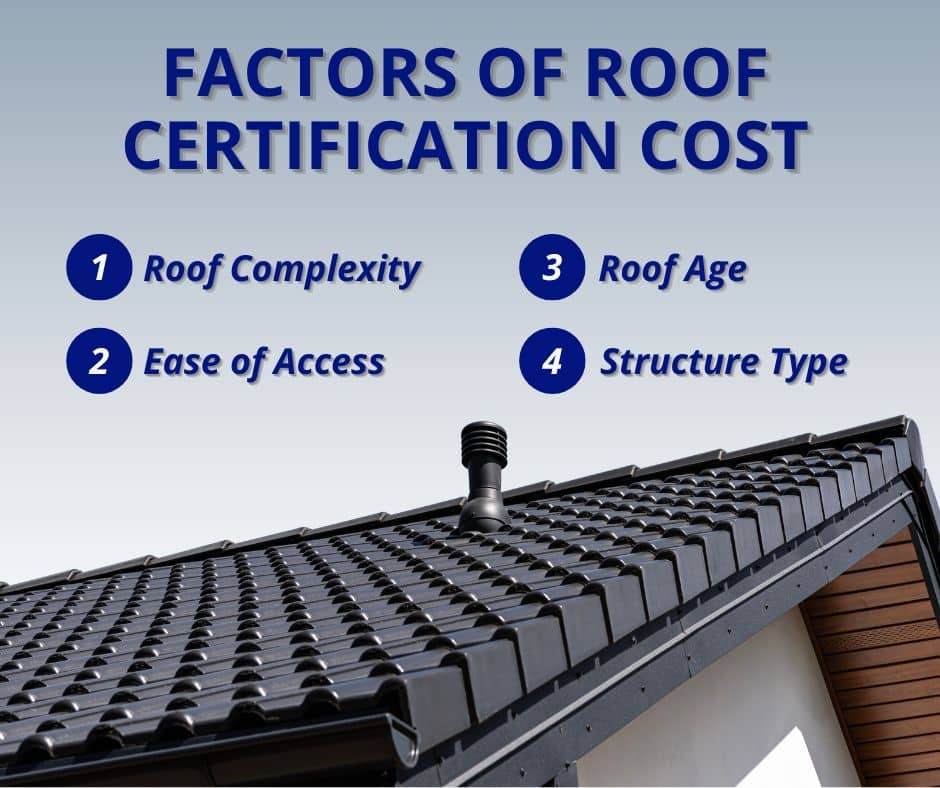
Roof certification costs in Florida typically vary depending on the type of roof. Factors that influence the price include the height and complexity of the roofing system, ease of access, and whether repairs are needed before certification can be issued.
More complex structures or roofs that require repairs before a licensed roofing contractor can certify them will cost more.
For most homeowners, the cost is a fraction of what a coverage gap, a failed home sale, or undetected water damage could lead to over time.
Why Choosing the Right Inspector Matters
Roofing contractors can issue certifications in Florida, but they also perform repairs and replacements. That creates a conflict of interest.
A certified roof inspector who performs no repair work has no incentive to find problems that do not exist and every reason to deliver an accurate, unbiased professional assessment.
An independent inspector also cannot offer to repair the roof they just inspected, which is exactly why their report carries more credibility with insurers and prospective buyers alike.
This is the principle Honor Services has operated on since John Shishilla founded the company in 2008. For homeowners in Indian Harbour Beach, Sebastian, Indialantic, and across the Space Coast, objectivity matters when your coverage and your property value are both on the line.
Related Questions to Explore
- How long does a roof certification take, and when will I get my report? Most inspections take 30 to 45 minutes. Reports for a roof certification inspection are typically delivered within 24 hours, fast enough for most insurance or closing deadlines.
- Can a Roof Certification Help Lower My Insurance Premium? A certified roof in good condition reduces the insurer’s perceived risk, which can help lower insurance premiums or keep your existing rate from increasing. Pairing your certification with a wind mitigation inspection is where the biggest savings happen, sometimes 20% to 45% off your premium.
- Does Bundling Inspections Save Time and Money? You can schedule a roof certification alongside a four-point or wind mitigation inspection in a single visit. Honor Services offers bundled inspections across all Space Coast service areas, helping homeowners extend the value of each appointment.
- Could My Roof Issues Be Leading to Water Intrusion or Mold? A roof certification focuses on remaining useful life, but visible roof damage is frequently connected to deeper moisture problems inside the home. Water intrusion and mold can develop well before a leak becomes obvious. Honor Services offers both mold testing and water intrusion inspections as well.
- What about a Roof Certification for Mobile Homes? Mobile homes follow different standards than site-built homes. Honor Services performs mobile home tie-down inspections and can address roof condition questions specific to manufactured housing across the area.
When to Call a Professional
Schedule a roof certification inspection if any of the following apply:
- Your insurance company has requested proof or a certificate of roof condition
- Your roof is 15 years or older, with no permit on file
- You are buying, selling, or refinancing, and need to satisfy lender or buyer requirements
- You have experienced storm damage and want a documented baseline
- Your policy is up for renewal, and you are uncertain how roof age will affect your coverage
Conclusion
A roof certification is one of the most important documents tied to your home’s insurability in Florida. In Brevard County, where Atlantic coastal weather, active hurricane seasons, and a tightening insurance market all converge, certified proof of your roof’s condition is not just paperwork. It is protection.
Honor Services serves homeowners across the Space Coast from Titusville to Vero Beach with roof certification inspections, four-point inspections, wind mitigation reports, and more. If your insurance company is asking for documentation, or you simply want to know where your roof stands before they do, we are here to help.
Schedule your roof certification inspection with Honor Services today.