How to flush a tankless water heater is one of those home maintenance tasks that feels optional, until your “endless hot water” starts turning lukewarm. However, over time, mineral deposits can build up inside the heater, diminishing its performance and potentially causing damage.
If you want a simple way to protect performance, avoid surprise error codes, and keep your showers consistent, this guide walks you through the process step by step.
And if you are buying or selling a home, it helps to remember that the water heater condition is often part of the bigger picture during a home inspection.
What Flushing a Tankless Water Heater Actually Does
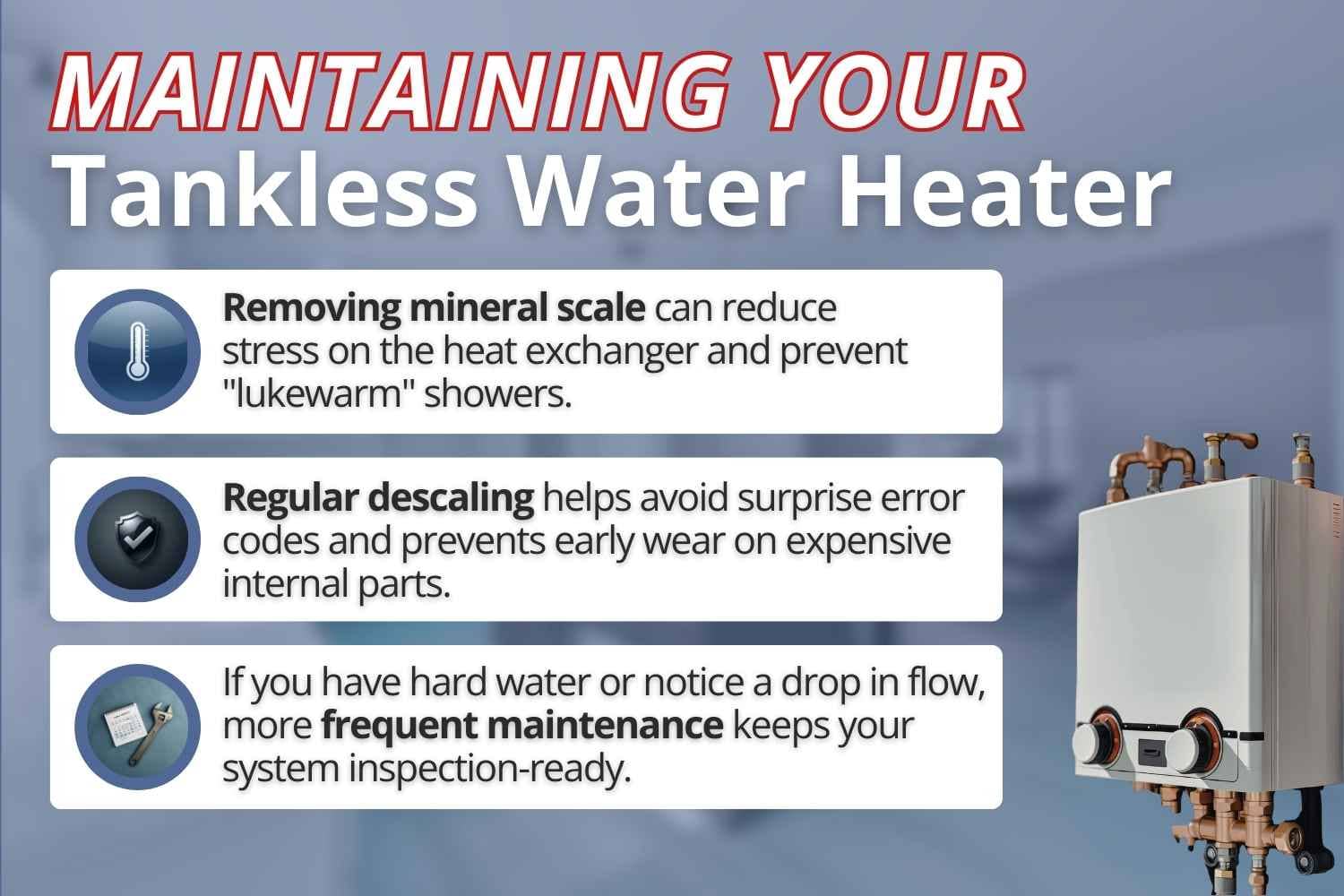
A tankless water heater warms water as it flows through a heat exchanger. Over time, minerals in your water (mainly calcium and magnesium) can form a hard layer inside that exchanger. Think of it like the crust you might see inside a kettle.
Flushing is basically a controlled cleaning cycle that:
- Dissolves and removes scale buildup
- Restores better heat transfer, so the unit does not work as hard
- Helps stabilize water temperature and flow
- Reduces the chance of early wear on internal parts
Moisture and plumbing issues often travel together. If you are also seeing stains, damp drywall, or soft baseboards near plumbing, it is worth learning how water intrusion can show up in places you would not expect.
Signs Your Tankless Water Heater May Need a Flush
Some homeowners wait for an error code. A better approach is to watch for early changes, like:
- Hot water takes longer to get to the taps
- Water goes hot, then cool, especially during longer showers
- A noticeable drop in flow on the hot side
- New rattling, ticking, or rumbling sounds when the unit runs
- The unit shows maintenance reminders or scale-related codes (varies by brand)
- Higher energy use with no clear reason
During inspections, we often see homeowners miss small mechanical clues because the system still “works.” The goal is not to panic. It is to spot the pattern early, the same way a good home inspection report highlights minor items before they become expensive surprises.
Before Flushing a Tankless Water Heater
Before beginning the flushing process, make sure to turn off the power supply and the water supply. This can be done by switching off the circuit breaker or unplugging the unit.
Locate the shut-off valves on both the cold water inlet and hot water outlet pipes of the water heater. Close these valves to stop the flow of water into and out of the unit. From there, you’re ready to get started!
Steps to Follow
1) Connect Hoses – To flush the tankless water heater, you will need to connect hoses to the cold water inlet and hot water outlet valves. Use a pair of pliers to loosen the nuts on these valves and attach the hoses securely.
2) Submerge Hoses in a Bucket of Descaling Solution – Fill a bucket with a recommended descaling solution. This can be something like white vinegar, mixed with water. Make sure to fully submerge the hoses in the solution!
3) Open Valves and Let the Solution Circulate – Open both the cold water inlet and hot water outlet valves. This will allow the descaling solution to circulate through the tankless water heater. Let the solution run for at least 45 minutes to effectively dissolve the mineral buildup.
4) Rinse With Clean Water – After the recommended time has passed, close the valves and disconnect the hoses from the tankless water heater. Flush the unit thoroughly by running clean water through it to remove any remaining descaling solution.
5) Check for Debris and Signs of Damage – Inspect the internal components of the tankless water heater for any debris or signs of wear and tear. Clear out any accumulated debris and ensure all parts are in good condition.
6) Restore Power and Water Supply – Once everything is clean and in proper order, restore the power supply by turning on the circuit breaker or plugging the unit back in. Open the shut-off valves to allow water to flow into and out of the tankless water heater again.
How Often Should You Flush a Tankless Water Heater?
The frequency of flushing a tankless water heater depends on various factors, including the hardness of the water in your area and the manufacturer’s recommendations.
In general, it is recommended to flush the unit at least once a year to maintain optimal performance. However, if you notice a significant decrease in hot water flow or experience issues with the heater, it may be necessary to flush it more frequently.
A Quick Table To Help You Decide What To Do Next
Flushing solves scale-related issues, but not every symptom is a “flush” problem. Use this table as a fast way to narrow it down.
| Water is pooling near the unit | Common Cause | A Smart First Step | When To Stop DIY |
|---|---|---|---|
| Hot water turns lukewarm mid-shower | Scale reducing heat transfer | Run a flush cycle | Repeats quickly after flush |
| Low hot-water flow at multiple fixtures | Clogged inlet filter or scale | Clean inlet filter, then flush | Flow stays low after filter cleaning |
| Rattling/ticking inside unit | Scale or restricted flow | Flush and rinse thoroughly | Noise continues, or error codes return |
| Error code about flow or scale | Maintenance needed | Check manual, flush if appropriate | Gas-related codes or repeated lockouts |
| Water pooling near unit | Leak, drain issue, or loose fitting | Shut down and inspect carefully | Any active leak you cannot pinpoint |
If you are ever unsure whether moisture is from plumbing or something else, that is a great moment to step back and look at the bigger moisture story. Florida homes can hide moisture pathways, which is why services like mold testing can be helpful when smells or symptoms do not match what you can see.
Other Recommended Maintenance
Now that you know about flushing tankless water heaters, let’s take a look at a few other areas. One of those is knowing the right size of tankless water heater that you need. It will depend on the size of your family and how much water they are using. You can do this by calculating the Flow Rate, gallons per minute (GPM), and temperature pressure.
Another is fixing low water pressure. This can happen for several reasons, such as partially closed valves, debris in pipes, corroded water lines, and leaking water pipes, to name a few.
Lastly, if your AC unit is near your water heater and it is leaking water, you may not know which unit is leaking. Take a closer look at the AC unit, and it can be leaking because of a clogged drain line, a dirty air filter, or low refrigerant.
When It Is Smarter To Call A Professional
A DIY flush is realistic for many homeowners. It is also completely reasonable to hand it off when the setup is not simple.
Consider calling a professional if:
- Your unit does not have service valves
- You smell gas, see scorch marks, or notice electrical issues
- The system keeps locking out or throwing codes
- You see active leaking at the unit or fittings
- You are not comfortable shutting off gas or power safely
Also, if you are in the middle of a transaction, remember that the water heater’s condition can affect repair negotiations and planning. Routine maintenance is helpful, but it does not replace a full evaluation of the home’s systems.
Related Questions
Does a tankless water heater get checked during a home inspection?
A visual review of the unit, installation, and obvious leaks or safety concerns is commonly part of a home inspection cost conversation, especially for buyers planning repairs or replacements.
Will scale buildup show up on a four-point inspection?
A four-point inspection is not a full diagnostic, but plumbing red flags can still be noted, and understanding what a four-point inspection report is designed to capture can help.
What if I have low hot-water flow in only one bathroom?
That can be a fixture or valve issue, but if flow problems are accompanied by slow drains or backups, it may be worth checking the plumbing system more broadly, including a sewer scope inspection for older homes.
Could a slow leak near the water heater lead to mold in Florida?
Yes, ongoing moisture can create mold-friendly conditions, which is why it helps to learn how mold in Florida homes can develop even from small, repeated leaks.
Conclusion
Flushing a tankless water heater is a practical way to reduce scale buildup, improve performance, and avoid the stress of hot-water surprises. If you make it part of a yearly routine, watch for early warning signs, and take moisture seriously, you can protect both comfort and the materials around the unit.
If you want an experienced set of eyes on the home’s major systems, including the water heater area and any moisture clues nearby, you can schedule a home inspection with Honor Services and get clear, Florida-specific answers.