Living in places like Melbourne or Palm Bay means we get to enjoy the beautiful Indian River Lagoon and our amazing beaches. However, it also means we have to be ready for the Atlantic hurricane season every year. If you are a homeowner in Brevard County, you know that being prepared is not just about buying water and batteries.
Hurricanes pose a serious threat to property and safety, with risks such as flooding, destructive winds, and storm surge.
That’s why it’s crucial to have a comprehensive hurricane plan that includes evacuation routes and emergency supplies to ensure you and your family are ready for any emergency. It’s about making sure your home can stand up to the wind and rain.
When Does the 2026 Florida Hurricane Season Start and End?
The 2026 Atlantic hurricane season runs from June 1st through November 30th, which is the official hurricane season as established by the National Hurricane Center in 1965.
However, the World Meteorological Organization recommended in 2021 that the National Hurricane Center assess moving the start date of hurricane season to May 15.
While storms can technically form outside of these months, the vast majority of tropical activity happens during this six-month window. June and July typically exhibit low to moderate tropical cyclone activity, with a sharp rise in activity occurring in August.
Hurricane Risk on the Space Coast
For 2026, experts are predicting a near-normal season of around 14 named storms and about 7 hurricanes. On average, 14 tropical storms form during the Atlantic hurricane season, with 7 of those becoming hurricanes, and about 3 major hurricanes (Category 3 or higher) per season.
Even so, it only takes one storm to cause major damage to your home. Major hurricanes are defined as Category 3 or higher, with maximum sustained winds greater than 110 mph, making them especially dangerous.
Along the Space Coast, the most active months tend to be August, September, and October, when warm ocean water acts as fuel for developing systems. The most active period for Atlantic hurricanes is from mid-August through late October, with the statistical peak on September 10.
The peak of hurricane season in Florida occurs between mid-August and late October, when ocean temperatures are warmest.
Your Hurricane Season Prep Timeline
The most effective way to protect your home is to spread your preparation out across the calendar rather than scrambling in late May.
- January through April is the time to schedule inspections, make repairs, and address anything your insurance company has flagged. This is when contractors are easiest to book, and materials are most available.
- May is the time to confirm your shutters, hurricane straps, and garage door bracing are in place. Walk your property and identify anything loose that will need to be stored or secured when a storm approaches.
- This is also the month to photograph or video every room in your home, note serial numbers on major appliances, and save digital copies of your insurance policy and current inspection reports to cloud storage or a secure off-site location.
- Having this documentation ready before a storm speeds up any insurance claim you may need to file.
- June through November is the active season. Monitor forecasts, keep your yard clear, and know your evacuation zone.
Check Your Roof Before June Starts
Your roof is the first line of defense for your home. If it fails during a hurricane, everything inside is at risk. Before the season starts, have a professional evaluate your shingles or tiles for signs of aging, loose fasteners, and leaks. High winds can catch a single loose shingle, peel it back, and expose the decking beneath to hours of driven rain.
At Honor Services, we perform roof certification inspections to give you a clear picture of your roof’s condition. If you live in an older home in a community like Rockledge or Titusville, your roof may be approaching the end of its rated life. Getting an inspection now allows you to make repairs before the summer rains begin, rather than after.
Water stains on your ceiling after a regular rainstorm, curled or missing shingles, or an insurance request for a current roof report are all signs you should call a professional right away.
The Value of a Wind Mitigation Inspection
A wind mitigation inspection is one of the most financially valuable things a Florida homeowner can do. This inspection documents specific features of your home that help it resist high winds, and the resulting report can qualify you for discounts on your homeowner’s insurance premium.
In April 2026, the state updated the official wind mitigation form, so there are new standards for how inspectors evaluate your home’s safety features.
At Honor Services, we look at how your roof deck is attached to the walls, the type of roof-to-wall connectors, such as hurricane clips or wraps, and the shape of your roof. Hip roofs generally perform better in high winds than gable roofs. We also evaluate your windows, entry doors, and garage doors for impact protection.
| Feature | Why It Matters |
|---|---|
| Roof-to-Wall Straps | Keeps the roof from lifting off in high winds |
| Impact Windows | Prevents glass failure and interior pressurization |
| Secondary Water Barrier | Adds a leak-resistant layer beneath your shingles |
| Hurricane Shutters | Protects glass from debris impact |
| Reinforced Garage Door | Prevents blow-in failure that can lift the roof |
Your garage door deserves special attention. It is one of the most common structural failure points in a hurricane. An unreinforced garage door can blow inward and create enough pressure to destabilize your roof. If your garage door has not been evaluated for wind resistance, that should be near the top of your pre-season checklist.
Ready to see where your home stands? Contact Honor Services to schedule your wind mitigation inspection before the season begins.
Electrical Panels and Generator Safety
Storms in Brevard County frequently cause extended power outages, and generator use surges after every major event.
Improper generator hookups are a leading cause of carbon monoxide poisoning and electrical fires in the days following a storm.
Before hurricane season, confirm that your electrical panel is in good condition and that any generator you plan to use is properly connected through a transfer switch rather than plugged directly into your home’s wiring.
If your home is over 20 years old, your insurance company may already be asking for a four-point inspection, which covers your roof, electrical, plumbing, and HVAC systems. Having a current four-point report on file gives you, your insurer, and any future buyer a clear picture of your home’s major systems before a storm tests them.
Seawalls, Docks, and Flood Zone Awareness
If you live along the water in Melbourne Beach or Merritt Island, your property faces additional risks. Hurricanes can produce storm surge flooding, which is caused by a storm’s winds pushing water onshore, resulting in an abnormal rise in sea level that can reach up to 25 feet above normal water levels during the strongest hurricanes.
Storm surge puts significant pressure on seawalls, and any existing cracks or gaps can allow moving water to wash away the soil behind the wall. This can lead to yard sinkholes or foundation instability. We offer seawall and dock inspections to identify erosion, structural gaps, and early signs of failure before a storm makes those problems catastrophic.
It is also worth knowing your flood zone status. Brevard County has extensive FEMA flood zone designations, and many homeowners along the Space Coast are uncertain whether their property requires flood insurance or an elevation certificate. You can check your status through the Brevard County Property Appraiser’s office or the FEMA Flood Map Service Center.
Knowing where you stand before June 1 gives you time to secure coverage if you need it.
How Pests React to Hurricane Season
Heavy rain pushes subterranean termites toward your home. These pests are drawn to wet or damaged wood, and even a small storm-related roof leak can create the conditions they need to establish a colony. Rodents also seek higher, drier ground when it floods, and they will exploit any gap in your eaves, vents, or foundation to get inside.
Before the season begins, check your roofline and foundation for small openings that could serve as entry points. Our pest control team uses Integrated Pest Management to identify and seal those vulnerabilities before they become infestations.
After a storm, walk your property and empty any standing water in flower pots, buckets, or low areas, as mosquitoes can breed in as little as a bottle cap of water within days of rainfall.
Mobile and Manufactured Homes
Mobile homes require special attention during any wind event. The most important factor is the tie-down system. Florida has specific requirements for how manufactured homes must be anchored, and over time, those anchors can rust or loosen in sandy coastal soil.
A mobile home tie-down inspection confirms that your anchors, straps, and overall stability meet current standards. Even a weaker tropical storm can shift an improperly anchored home significantly.
What to Do After the Storm
Most hurricane content focuses on preparation, but what happens after a storm is just as important. Wait until local authorities confirm it is safe before returning to or walking around your property. Do not enter your home if you see obvious structural damage, smell gas, or notice downed power lines nearby.
Once it is safe, do a careful exterior walk-around before going inside. Document any damage with photos and video immediately, before making any temporary repairs. Contact your insurance company to open a claim, and call a professional inspector before beginning any significant repair work.
A post-storm inspection report creates a clear, dated record of storm-caused damage that supports your claim and protects you if disputes arise later. At Honor Services, our two-inspector team approach means we can turn around a post-storm inspection report the same day. That speed matters when your insurance adjuster is working through a backlog of claims.
Related Questions About Hurricane Preparedness in Brevard County
Does homeowner’s insurance cover hurricane damage in Florida? Standard homeowner’s insurance typically covers wind damage but excludes flood damage from storm surge, which requires a separate flood insurance policy through the NFIP. A current wind mitigation report from Honor Services can also help reduce your wind coverage premium.
What is the difference between a wind mitigation and a four-point inspection? A wind mitigation inspection documents your home’s hurricane-resistant features and can qualify you for insurance premium discounts. A four-point inspection evaluates the condition of your roof, electrical, plumbing, and HVAC systems, and is often required by insurers for homes over 20 years old. Honor Services performs both.
How often should my roof be inspected before hurricane season? Most carriers recommend a professional roof inspection at least once a year, with an additional inspection after any significant storm. If your roof is more than 15 years old, more frequent evaluations are advisable. Honor Services can perform a roof certification and help you determine whether repairs are needed before June 1.
Should I be concerned about my seawall even if it looks fine? Yes. Seawall damage often develops beneath the surface before it becomes visible. Erosion behind the wall and early structural failure can be present with no obvious exterior signs. A professional seawall or dock inspection identifies these issues before a storm surge event makes them catastrophic.
Can pests really become a problem during hurricane season? Absolutely. Heavy rainfall displaces subterranean termite colonies and drives rodents toward your home’s interior. Storm-related roof damage creates entry points and moisture conditions that termites are drawn to. Our Integrated Pest Management approach is most effective when completed before the season begins.
When to Call A Professional
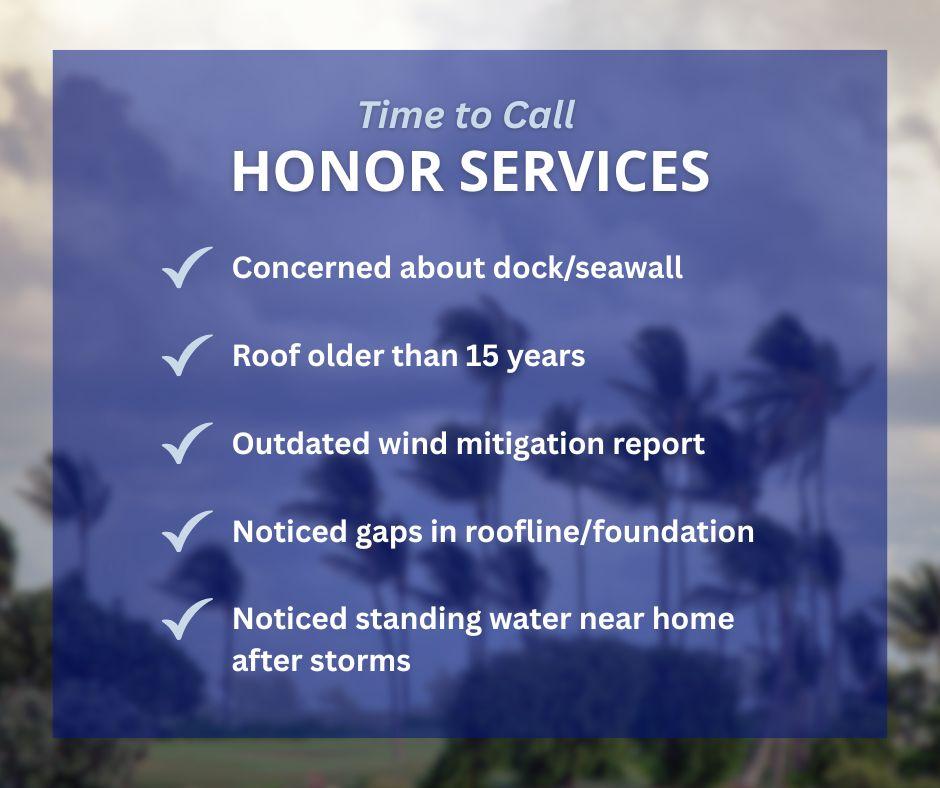
Don’t wait for storm season to begin. Contact Honor Services if your roof is over 15 years old or hasn’t been inspected within the last year. Reach out if your wind mitigation report is outdated, if your insurer requires a four-point inspection, or if you live near the water and have concerns about your seawall or dock.
Also, call us if you notice pest activity, gaps around your roofline or foundation, or standing water after rainfall.
After a storm, call us before beginning any repairs. A same-day post-storm inspection report creates a documented record that protects you through the claims process.
Honor Services serves Melbourne, Palm Bay, Rockledge, Titusville, Merritt Island, and communities throughout Brevard County. Call us or schedule online today for your pre-season inspections or pest treatments.
Conclusion
Hurricane season is a reality of life on the Space Coast, and the homeowners who come through it with the least damage are the ones who prepared months in advance. A roof inspected in February, a wind mitigation report filed in March, and a pest inspection completed in April are worth far more than the same services scheduled in a panic after a storm watch is posted.
At Honor Services, we are your neighbors in Melbourne, Palm Bay, and across Brevard County. Whether you need a roof certification, a wind mitigation inspection, a four-point report, a seawall evaluation, or pre-season pest control, one call handles it all. Reach out today and let us help you get ahead of the 2026 season before it arrives.