The key difference between termites vs ants is the type of damage they cause. Termites feed on wood and can weaken your home’s structure over time, often without being noticed. Ants usually enter homes in search of food, water, or shelter and are more of a nuisance than a threat to the structure itself.
Because these pests can look similar, especially when wings are present, many homeowners are unsure what they are seeing. Recognizing the signs early matters. Catching a termite problem in its early stages can help prevent serious damage and expensive repairs.
What Is the Difference Between Termites vs Ants?
The easiest way to distinguish between termites and ants is by examining their behavior and the type of damage they cause.
Termites feed on wood and other cellulose materials. They live in large, hidden colonies and often stay out of sight while they work. Because termites eat wood from the inside out, damage can go unnoticed for long periods. By the time signs appear, parts of the home’s structure may already be weakened.
This difference matters because termites require specialized treatment and early intervention to prevent costly repairs. Ant problems are typically easier to control once the nesting source is found. Correct identification helps homeowners take the right action and avoid unnecessary damage or delays in treatment.
Why Termites and Ants Are Commonly Confused
Ants do not eat wood. Most ants enter homes looking for food, water, or shelter. While they can be annoying, they usually do not cause structural damage. Carpenter ants are the main exception. They tunnel into damp or damaged wood to build nests, but they do not consume the wood the way termites do.
Homeowners often confuse termites with ants because the two insects can look very similar, especially during certain times of the year. At a glance, it is easy to assume they are the same type of pest, which can lead to delayed action or the wrong kind of treatment.
This confusion happens because:
- Both insects are small and light-colored
- Both can swarm at certain times of the year
- Both are attracted to moisture and wood
When wings are present, the confusion becomes even more common. Flying ants and termite swarmers often appear near windows, doors, or light sources, making them difficult to tell apart without closer inspection.
Unfortunately, mistaking termites for ants can delay proper treatment, allowing termites to continue damaging wood and increasing the risk of costly repairs.
Why Correct Identification Matters for Homeowners
Correctly identifying termites vs ants helps protect your home and can prevent unnecessary repair and treatment costs. While both pests can be concerning, the level of risk they pose is very different.
Termites feed on wood and can slowly compromise critical parts of a home, including:
- Framing
- Floors
- Support beams
Because termites often remain hidden, damage can continue for months or even years before it becomes obvious. According to pest control industry estimates, termites cause billions of dollars in property damage each year. Much of this damage is preventable when infestations are detected early and treated properly.
Ant infestations are typically easier and less expensive to resolve. While ants can be persistent, they usually do not threaten the structure of a home.
Treating termites as ants, however, often leads to missed warning signs, delayed intervention, and deeper infestations that require more extensive repairs.
How to Tell Termites vs Ants Apart by Appearance
When insects are visible, physical features can provide helpful clues about whether you are dealing with termites or ants. While size and color alone are not reliable, certain body characteristics are easier to spot and can help narrow down the difference before a professional inspection.
Do Termites and Ants Have Different Body Shapes?
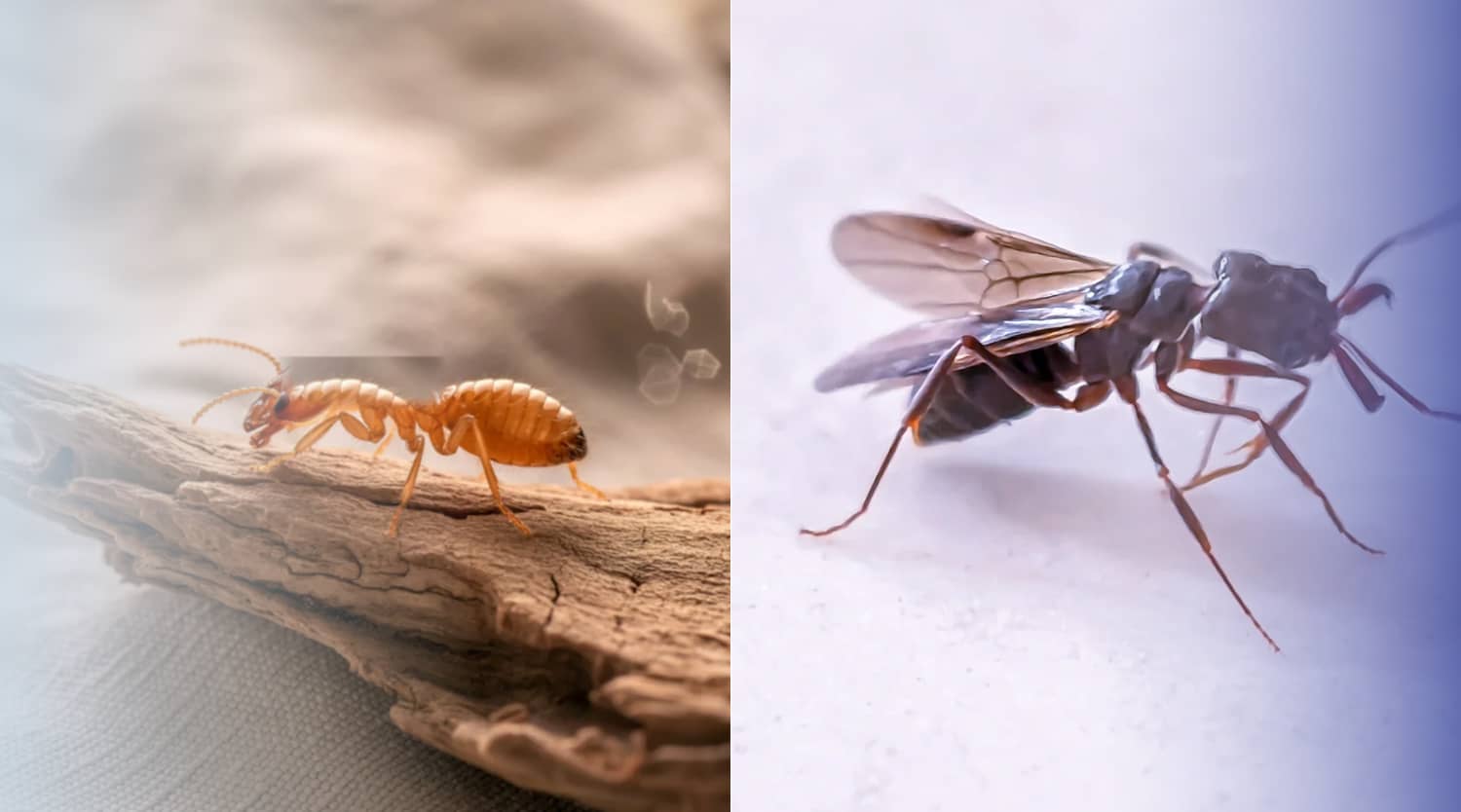
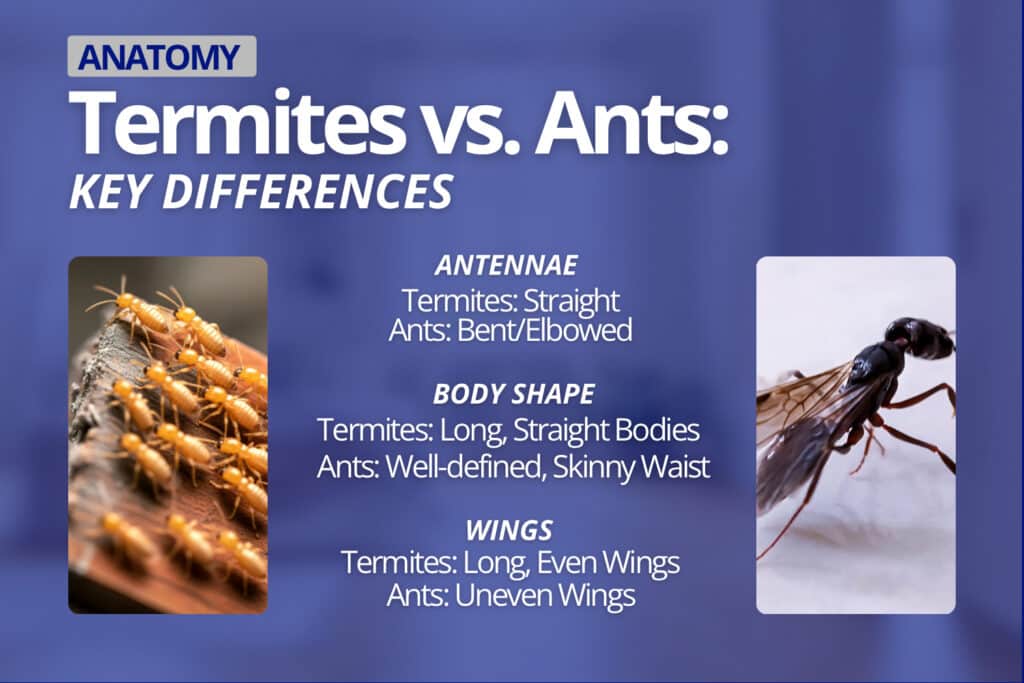
Yes. Termites have straight bodies with no narrow waist. Ants have a pinched waist that clearly separates their body sections.
Are Antennae Different on Termites vs Ants?
Yes. Termite antennae are straight or slightly curved. Ant antennae are bent or elbowed.
Do Termites and Ants Have Different Wings?
Yes. Termites have two pairs of wings that are equal in size. Ants have larger front wings and smaller back wings.
While these appearance-based differences are useful, they are not always easy to see without close inspection. Lighting, movement, and insect condition can make identification difficult.
If you are unsure, a professional inspection is the best way to confirm whether the pest is a termite or an ant and determine the right next step for protecting your home.
Key Signs of Termites Inside or Around a Home
Termites are often difficult to detect because they stay hidden while causing damage. Many homeowners do not realize there is a problem until signs become more obvious.
Knowing what to look for inside and around your home can help catch termite activity early, before serious structural damage occurs.
Mud Tubes Along Foundations
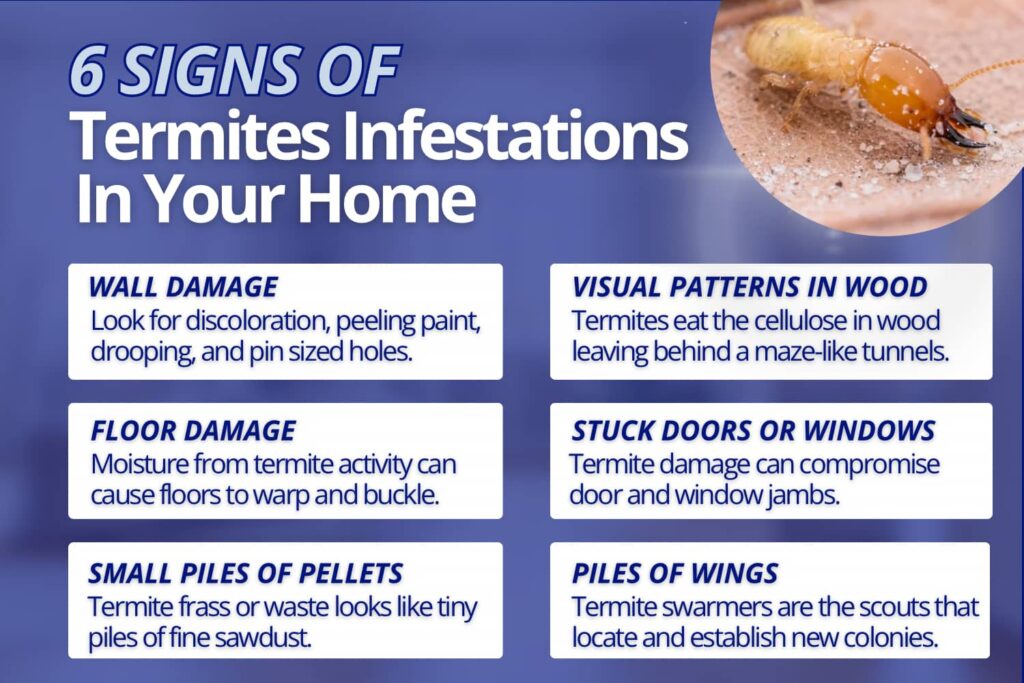
Termites build mud tubes to protect themselves while traveling between soil and wood. These tubes are often found along foundations, crawl spaces, and basement walls. Mud tubes help termites stay moist and hidden while moving between their colony and food source.
Hollow or Weak Wood
Wood damaged by termites may sound hollow when tapped. Paint may bubble or crack as termites eat wood beneath the surface. Over time, this damage can weaken floors, walls, and structural supports without being visible from the outside.
Discarded Wings Near Windows or Doors
After swarming, termites shed their wings. Small piles of wings near entry points are a common sign of activity. These wings are often found near windowsills, door frames, or light sources where swarmers are attracted.
Hidden Damage Behind Walls
Termites often remain out of sight. Damage can spread inside walls, floors, or framing before visible signs appear. Because termites work silently, infestations can grow larger before homeowners notice anything unusual.
If you notice one or more of these signs, it is important not to ignore them. Early evaluation by a professional can help confirm whether termites are present and reduce the risk of costly repairs caused by ongoing hidden damage.
Key Signs of Ant Infestations in Homes
Ant infestations are often easier to spot than termite activity because ants move openly in search of food and water. While ants can be frustrating to deal with, most species do not pose a serious threat to a home’s structure. Recognizing the signs can help homeowners address the problem early and prevent repeated infestations.
Visible Ant Trails
Ants often move in straight lines between their nest and food sources. These trails are commonly seen along baseboards or countertops. The presence of a trail usually means there is a nearby nest supplying the ants entering the home.
Nesting in Walls or Outdoors
Ant nests may be found in soil, under concrete, or inside wall voids. Carpenter ants prefer damp or decaying wood, often near leaks or moisture issues. These conditions make it easier for ants to establish nests close to the home.
Sawdust-Like Debris
Carpenter ants may push out small piles of wood shavings as they build nests. This is different from termite damage, which is usually hidden inside the wood. Finding this debris can help distinguish carpenter ants from termites.
While ant infestations are typically less damaging than termite problems, they can still become persistent if the nesting source is not addressed. Identifying the type of ant and its nesting location helps ensure the problem is handled correctly and does not return.
What Does It Mean If You See Flying Insects Indoors?
| Insect Types | What It Usually Means | Level of Concern |
|---|---|---|
| Termite swarmers | Indicates a nearby or existing termite colony; termites may already be inside the structure | Great concern due to potential structural damage |
| Flying ants | Part of a natural mating cycle; does not always mean an indoor infestation | Lower concern but still requires identification |
Why identification matters:
Flying ants and termite swarmers can look very similar. Assuming flying insects are harmless ants when they are actually termites can delay treatment and allow hidden damage to continue.
A professional inspection helps confirm the cause and protect your home.
Can Homeowners Reliably Identify Termites vs Ants Themselves?
Homeowners can often notice early warning signs of pest activity, but accurately identifying termites vs ants on their own can be challenging. Many insects share similar sizes, colors, and behaviors, which makes quick identification unreliable without experience or tools.
Do not rely only on:
- Color or size
- Online images
- One-time sightings
Lighting conditions, insect movement, and seasonal changes can all affect how pests appear. In addition, many ant species and termite species look nearly identical to the untrained eye. Some ants even develop wings, further adding to the confusion.
Because termites often remain hidden while causing damage, relying on guesswork can lead to missed warning signs. A professional inspection provides clarity, confirms the type of pest present, and helps assess whether any damage has already occurred.
This reduces the risk of overlooking a termite problem that could continue unnoticed.
When Should You Call a Pest Control Professional?
Knowing when to bring in a professional can make a major difference in protecting your home. While some minor pest issues can be managed early, termites and certain ant infestations require expert evaluation to avoid hidden damage and repeated problems.
You should call a professional if:
- You see mud tubes or damaged wood
- You find discarded wings indoors
- Insects return after DIY treatments
- You are unsure whether the pest is a termite or an ant
These signs often indicate a deeper issue that cannot be solved with surface-level treatments. Early inspections help confirm the type of pest present, identify any existing damage, and prevent larger infestations and costly repairs before they have a chance to develop.
How Professional Inspections Confirm Termites vs Ants
Professional inspections go beyond what homeowners can see during a quick walkthrough. Because termites often remain hidden and ants can nest in hard-to-reach areas, a trained inspection helps uncover activity that may not be obvious at first glance.
Technicians check:
- Structural wood and framing
- Moisture conditions
- Entry points and nesting areas
By examining these areas, professionals can determine whether the activity is caused by termites or ants, identify any existing damage, and evaluate conditions that may attract pests in the future. This approach helps ensure the correct treatment or monitoring plan is recommended, giving homeowners a clear path forward and greater peace of mind.
Related Questions
Are termites worse than ants?
Yes. Termites can damage the structure of a home by feeding on wood and weakening support systems over time. Ants are usually a nuisance pest and rarely cause structural damage, making termites the more serious concern.
Can ants become termites?
No. Ants and termites are completely different insects and do not change into one another. Although they may look similar at certain stages, they belong to different species with very different behaviors.
Do termites always swarm?
No. Termites swarm only during specific seasons and life stages, usually when colonies are mature and conditions are right. Swarming does not happen year-round, which is why termites can remain hidden for long periods.
How quickly can termites damage a house?
Termite damage can begin within months, depending on the size of the colony and environmental conditions. Because termites often work out of sight, damage may become significant before homeowners notice visible signs.
Can one treatment handle ants and termites?
No. Ants and termites require different treatment methods because their nesting habits and behaviors are not the same. Proper identification is necessary to ensure the right solution is used and the problem is fully addressed.
Conclusion
If you are unsure whether you are dealing with termites vs ants, taking action early is still the safest choice. Homes throughout Brevard County can be more susceptible to pest activity due to warm temperatures, humidity, and moisture conditions that attract both termites and ants.
Waiting too long can allow hidden issues, especially termite damage, to worsen before they are noticed.
Honor Services provides local termite inspections, ant control, and general pest evaluations to help homeowners understand what is happening in and around their homes.
Early detection often leads to simpler solutions, less damage over time, and clearer next steps, giving homeowners confidence in how to protect their property.