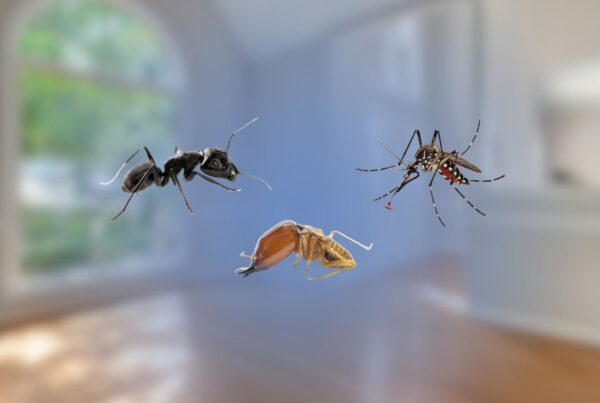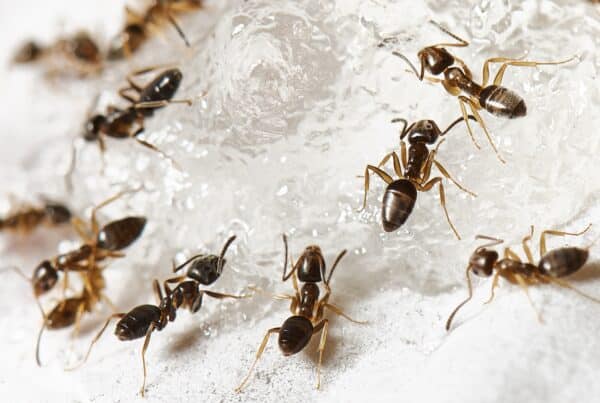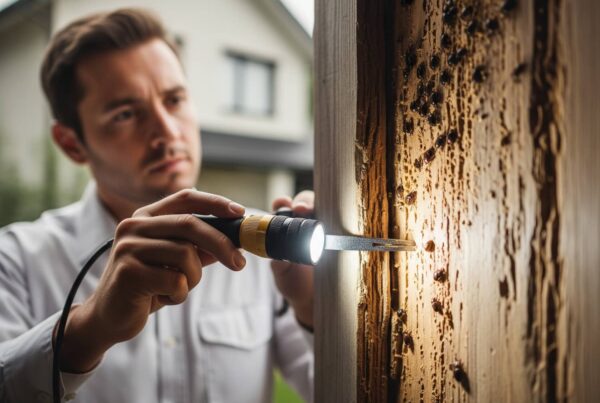
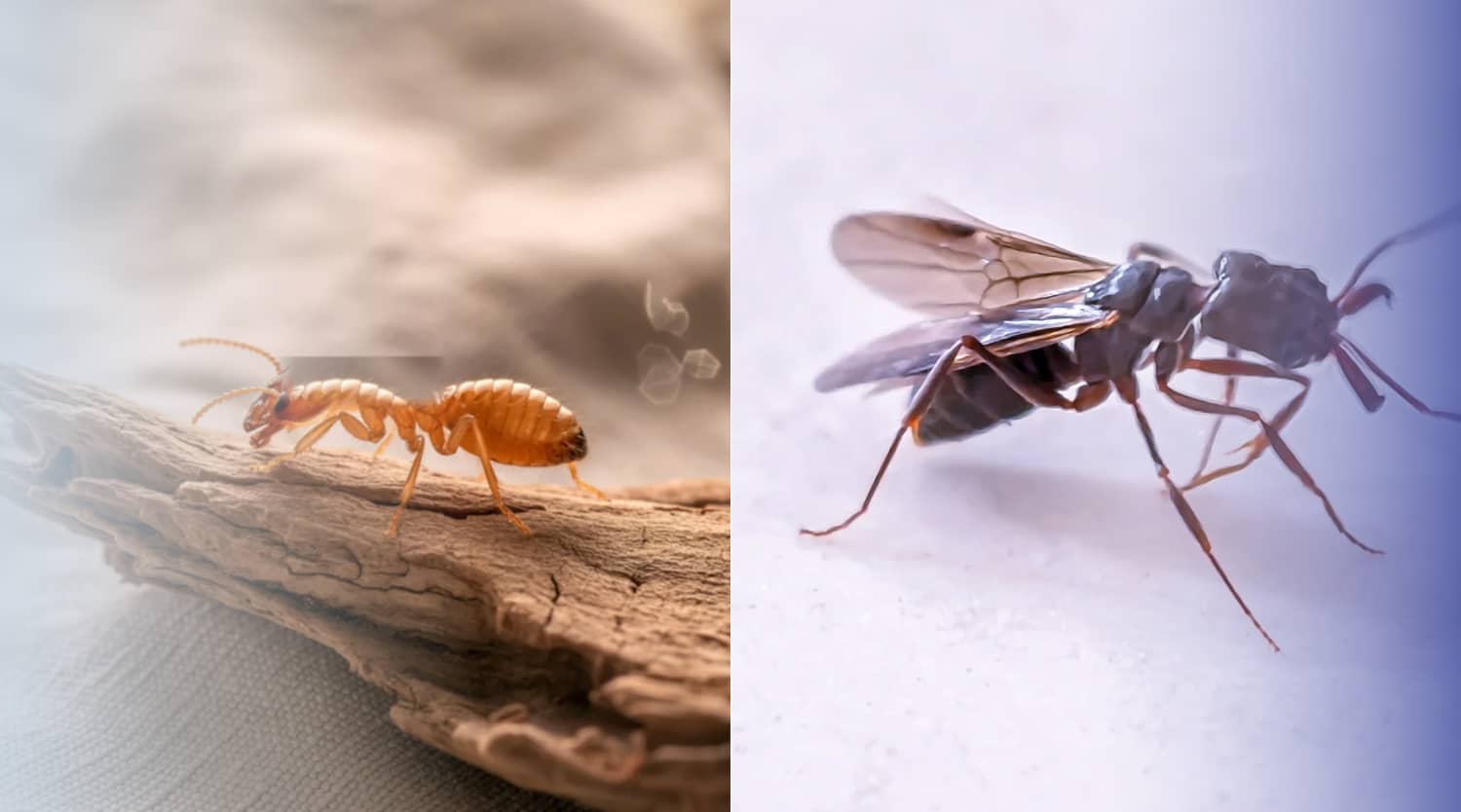
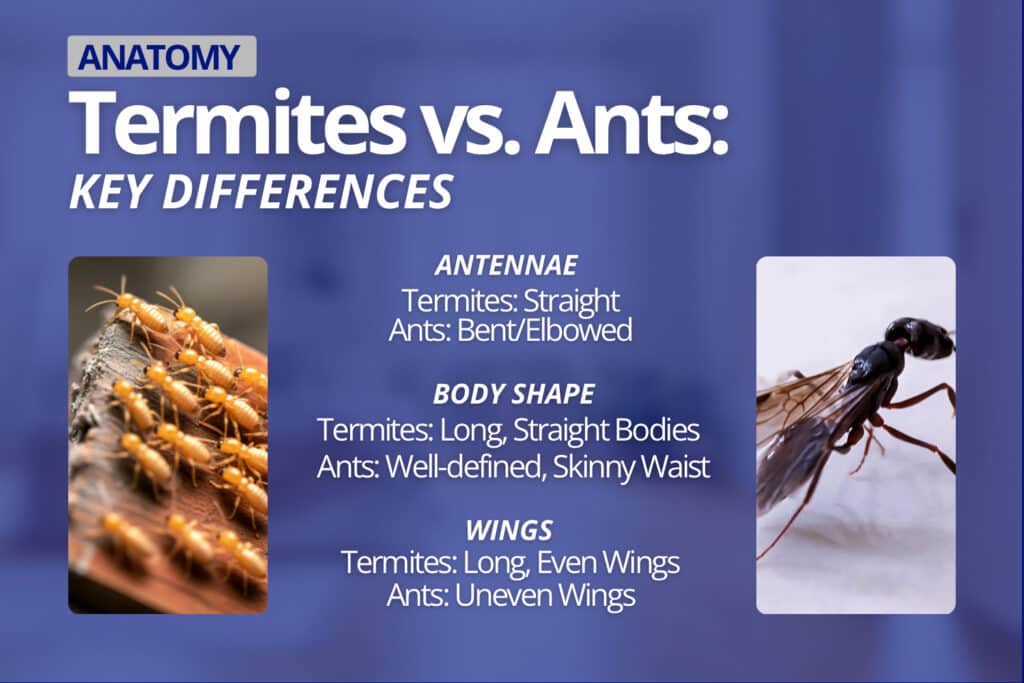
Not sure if you have ants or termites? Check three things: the waist, the antennae, and the wings. Ants have a pinched waist, bent antennae, and front wings that are longer than the back pair. Termites have a thick waist, straight antennae, and two pairs of wings that are equal in size. The difference matters because termites eat wood and ants usually do not.
Honor Services helps Brevard County homeowners tell the two apart, and this guide shows what to look for, when swarms happen in Florida, and what to do next.
Ants or Termites at a Glance
Ants and termites look alike from a few feet away, but their bodies are built differently. This table compares flying ants and termite swarmers, the winged stage people see most. Use it when you have one in hand or in a photo.
| Feature | Flying ants | Termite swarmers |
| Waist | Pinched, so the body clearly splits into three parts | Thick, so the body looks even from head to tail |
| Antennae | Bent, like an elbow | Straight, sometimes beaded |
| Wings | Two pairs, with the front pair longer than the back | Two pairs, all four the same length and often longer than the body |
| Eats wood? | No. Carpenter ants dig into wood but do not eat it | Yes. Termites feed on wood and other plant fiber |
| Level of concern | Usually lower | Higher, because a colony may be nearby or inside |
Color and size will not settle it. Both insects vary, so use the body shape, antennae, and wings.
How to Check a Swarmer Step by Step
Catch one or two insects and look at them up close. Tape a few to a sheet of white paper. That keeps them still and makes the wings easy to see. Your phone camera zoom also works well.
Look at the waist
Termites have a broad waist, so the body looks like one even tube. Ants have a narrow, pinched waist that separates the body into three clear parts: head, middle, and rear.
Check the antennae
Termite antennae are straight or only slightly curved. Ant antennae bend sharply, like an elbow. This is often the easiest feature to spot.
Compare the wings
Termites have two pairs of wings of equal length, and the wings are usually longer than the body. Ants also have two pairs, but the front wings are longer than the back wings.
Skip color and size
Extension experts at the University of Florida warn that body color is not a reliable clue, because both insects can range from light to dark. Judge by shape, not shade.
Why Homeowners Mix Them Up
Flying ants and termite swarmers get confused because they act alike in a few ways:
- Both swarm in groups to find mates and start new colonies.
- Both are drawn to light, so they gather around windows, doors, and lamps.
- Both shed their wings after swarming, so you may find small piles of wings.
- Both are drawn to moisture and wood.
Carpenter ants are the ant most often mistaken for termites. They tunnel into damp or damaged wood to build nests, but they do not eat it. Termites do eat wood. That one difference is why the two pests need different treatment.
Mistaking termites for ants can cost you time. While you wait, the colony keeps feeding. Our termite identification page shows more of what termites look like at each stage.
When Do Termites and Ants Swarm in Florida?
Swarm timing in Florida depends on the species. The University of Florida’s UF/IFAS Extension lists 20 termite species established in Florida, and they do not all swarm on the same schedule.
Here are two examples from UF/IFAS Extension:
- Eastern subterranean termites in North Florida generally swarm from December through April, and sometimes into May when the weather is good.
- West Indian drywood termites in the Florida Keys swarm as the rainy season starts.
Termites are drawn to light, so swarmers often show up around street lights, porch lights, and windows. Flying ants swarm in warmer months, depending on the species.
Because the schedule changes by species and by place, a swarm in your yard is not a clear sign of which insect it is. Check the waist, antennae, and wings.
What Swarmers Inside Your Home Mean
Where you find the insects matters as much as what they look like.
| What you see | What it usually means | Level of concern |
| Many winged insects indoors, plus shed wings on windowsills | A termite colony may be in or near the structure | High. Call soon |
| A few winged insects around a light | Could be ants or termites | Medium until identified |
| Winged insects outdoors only, near lights | A colony is nearby, but not necessarily in your home | Low to medium. Get them identified |
| Winged ants with pinched waists indoors | An ant colony is nearby, possibly in a wall void or damp wood | Lower, but still worth identifying |
UF/IFAS Extension notes that when termite swarms show up in large numbers inside a home, the colony is probably in the structure and may be doing damage. A swarm of termites inside the house should not wait.
Signs of Termites vs Signs of Ants
Swarmers are only one clue. The signs left behind tell a clearer story.
Signs of Termites
Termites often stay hidden, so damage can grow for a long time before you notice it. Look for:
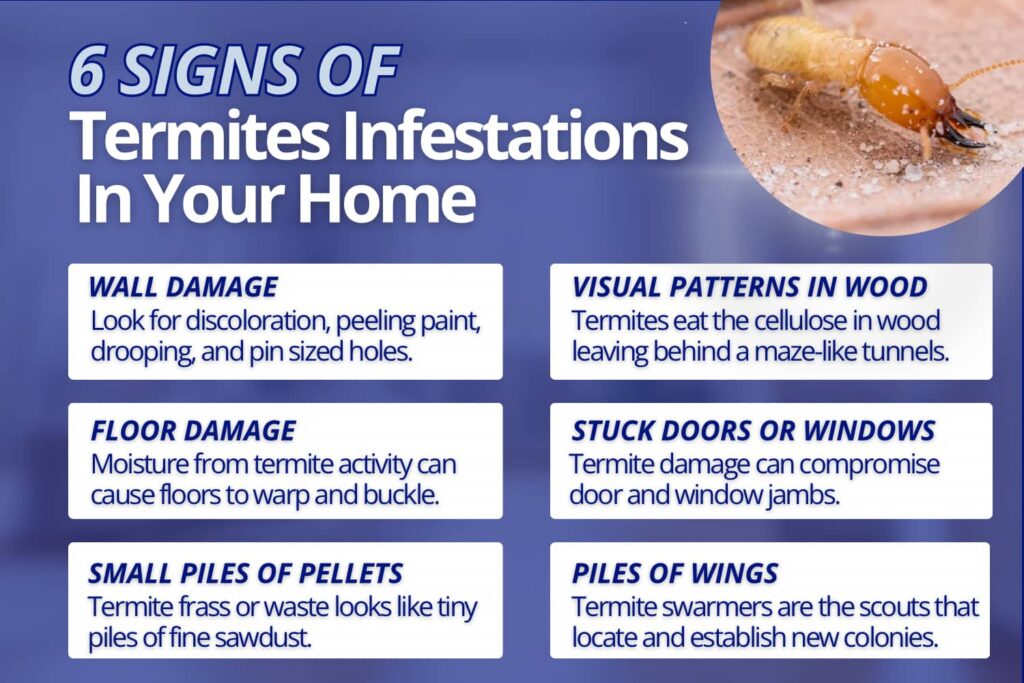
- Mud tubes. Termites build thin mud tubes along foundations, crawl spaces, and walls to travel between soil and wood. Our guide on how to tell if you have termites shows what they look like.
- Hollow or soft wood. Wood that sounds hollow when you tap it, or paint that bubbles or cracks, can mean termites are eating underneath.
- Piles of shed wings. Small piles near windowsills, door frames, and lights point to a recent swarm.
- Tiny pellets. Drywood termites push out small, hard pellets of waste from the wood they live in.
- Hidden damage. Framing, floors, and beams can be damaged before anything shows on the surface. A trained inspector can reveal termite damage during an inspection that is easy to miss on your own.
Signs of ants
Ants usually work in the open, which makes them easier to spot.
- Trails. Ants walk in lines between the nest and food, often along baseboards, counters, and walls. A trail points to a nest nearby. If your trail leads to the kitchen, see why you may have ants in your kitchen.
- Nests. Ants nest in soil, under concrete, or inside wall voids. Carpenter ants prefer damp or decaying wood, often near leaks.
- Wood shavings. Carpenter ants push out small piles of wood shavings as they dig. This differs from termite damage, which stays hidden inside the wood.
- Moisture clues. Ants follow water and food. Learn what attracts ants to keep them out.
What to Do If You Find Swarmers
Spraying the insects will not reach the colony, so start with a few simple steps instead.
- Save a few. Tape two or three insects to white paper or place them in a sealed jar.
- Take clear photos. Get close-ups of the waist, antennae, and wings.
- Note where and when. Write down the room, the time of day, and whether you also found shed wings.
- Look around. Check for mud tubes, soft wood, wood shavings, or small pellets near where you found them.
- Leave walls and wood alone. Opening or breaking damaged wood can scatter termites and make treatment harder.
- Call for an inspection. If you cannot tell which insect it is, a professional can confirm it.
Related Questions to Explore
- Are termites worse than ants? Yes, for your home’s structure. Termites eat wood and can weaken framing, floors, and beams over time. Most ants are a nuisance and rarely harm the structure. Carpenter ants can damage wood by tunneling, but they work more slowly.
- Can ants turn into termites? No. Ants and termites are different insects. They do not change into one another. They only look alike at certain stages, mainly when both have wings. Termites are in fact more closely related to cockroaches than to ants. See what termites look like to the human eye for a closer comparison.
- Do flying ants eat wood? No. Flying ants are the winged reproductive stage of an ant colony, and ants do not eat wood. Carpenter ants dig into damp wood to build nests, but they push the wood out instead of eating it.
- Do termites always swarm? No. Termites swarm only at certain times, when a colony is mature, and conditions are right. Swarm timing depends on the species. Many colonies stay hidden for long periods without a visible swarm, which is why signs such as mud tubes matter.
- How fast can termites damage a house? It depends on the species and the size of the colony. A mature colony can cause real damage over months to years, and the damage is hard to see because it happens inside the wood. That is why early inspection helps.
- Can one treatment handle both ants and termites? No. Ants and termites nest and feed in different ways, so they need different treatments. Correct identification comes first. Honor Services offers ant control and termite treatment options, and a technician can match the plan to the pest.
When to Call a Professional
Call a pest control professional if any of these apply:
- You see mud tubes or damaged wood.
- You find shed wings or swarmers inside your home.
- Insects come back after you treat them yourself.
- You cannot tell whether the insect is a termite or an ant.
A professional inspection goes further than a quick walk-through. A technician checks structural wood and framing, moisture conditions, and the entry points and nesting areas. That tells you whether the activity is termites or ants, whether there is damage, and what could attract pests in the future. Knowing what to expect during a pest inspection can help you prepare.
Honor Services inspectors perform wood-destroying insect inspections and offer termite treatment options, including Sentricon, and ant identification and ant control.
Conclusion
When you cannot tell ants or termites apart, check the waist, the antennae, and the wings before you decide what to do.
- Pinched waist, bent antennae, and uneven wings mean flying ants.
- Thick waist, straight antennae, and equal wings mean termites.
- Swarmers inside the house, shed wings, or mud tubes are reasons to call for an inspection.
Not sure what you are looking at? Schedule a termite inspection with Honor Services in Melbourne and across Brevard County, and we will confirm what is in your home.