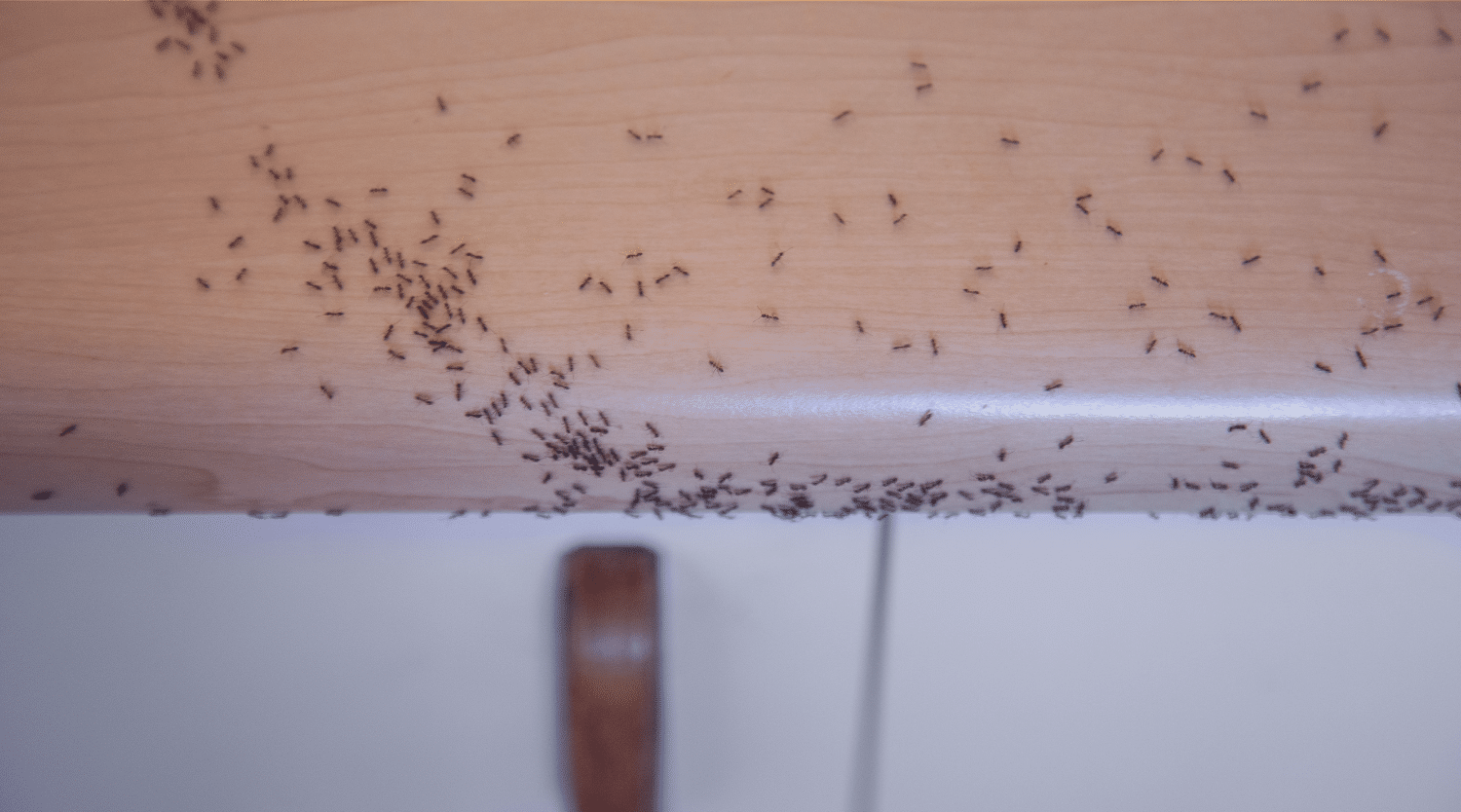
Ants show up in your kitchen because it offers exactly what a colony is searching for: food, water, and an easy way inside. A single ant on your counter is rarely the whole story. It is a scout, and it is already leaving a scent trail back to the colony for reinforcements to follow.
Understanding what is drawing them in, and how they are getting in, is the real starting point for making them stop.
What’s Actually Attracting Ants to Your Kitchen
Ants are relentless foragers, and your kitchen often unwittingly provides the ideal mix of basic resources their colony needs to thrive.
- Food residue. Crumbs, spills, unsealed food containers, and even residue left on dishes overnight are all ant magnets. Different species are drawn to different things: many common household ants prefer sweets and carbohydrates, while others go after fats, oils, and proteins.
- Water sources. Ants need water as much as food. A leaky faucet, condensation under a sink, or standing water in a dish rack can be enough to draw a colony’s attention, even in an otherwise clean kitchen.
- Warmth and shelter. As outdoor temperatures shift, especially during Florida’s cooler stretches or heavy rain, ants often move indoors seeking a stable environment. Kitchens, with consistent temperatures and nearby resources, are a common target.
How Ants Are Getting Inside
Ants can squeeze through gaps that seem far too small to matter, including:
- Cracks around window and door frames
- Gaps where pipes or cables enter the wall
- Spaces around baseboards
- Small openings in foundation or siding near the kitchen
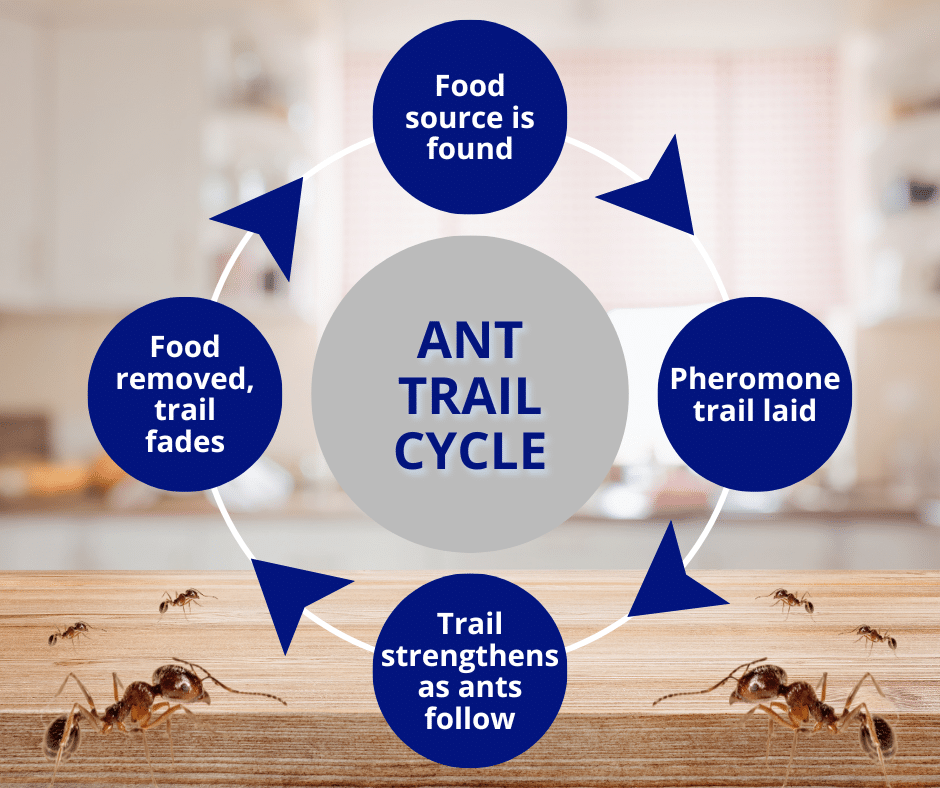
Once a scout ant finds a viable entry point and a food source, it lays down a pheromone trail that leads the rest of the colony straight to your kitchen. This is why an ant problem can escalate from “I saw one ant” to “there’s a trail across my counter” within a day or two.
Ants Are a Year-Round Issue in Florida Kitchens
In much of the country, ant activity is a seasonal problem that slows down once temperatures drop. Florida’s warm, humid climate works differently. Ant colonies here rarely go fully dormant, which means kitchens can see activity in any month, not just during a spring or summer spike.
A few local patterns worth knowing:
- Rainy season pushes ants indoors. Heavy rain can flood outdoor nests, sending colonies looking for dry, elevated ground, and a kitchen wall void or cabinet often fits the bill.
- Drought does the opposite. During dry stretches, ants move indoors chasing water rather than shelter, which is why a leaky faucet or a pet’s water bowl can become a magnet even in a clean kitchen.
- Humidity supports larger colonies. Consistent warmth and moisture let some species maintain larger, more active colonies year-round compared to regions with a hard winter that naturally thins populations.
This is part of why a one-time cleanup or a single round of store-bought spray so often falls short in Florida. The conditions that support ant colonies do not go away on their own the way they might in a colder climate.
Common Kitchen Ant Species in Florida
Not all ants behave the same way, and treating the wrong species with the wrong method is one of the most common reasons DIY ant control fails.
| Species | Common Signs | What They’re Drawn To |
| Little black ants | Tiny, dark, form long visible trails | Sweets and sugary residue |
| Odorous house ants | Emit a rotten coconut smell when crushed | Sweets, and sometimes greasy foods |
| Pharaoh ants | Very small, pale yellow to light brown | Sweets, fats, and proteins; nest indoors in wall voids |
| Argentine ants | Form large, fast-moving colonies | Sweets and honeydew from other insects |
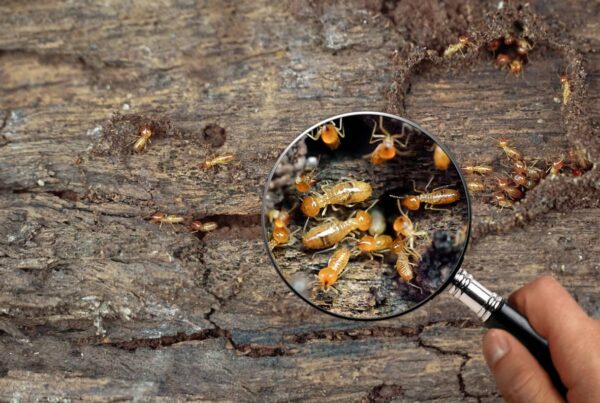
| Carpenter ants | Larger, often mistaken for termites | Not food-motivated in the same way; nest in moist or damaged wood |
Correct identification matters because bait-based treatments that work well on sweet-loving species often do little against a protein-seeking or wood-nesting species like carpenter ants.
Why Squishing Ants Doesn’t Solve the Problem
Killing the ants you see on your counter feels satisfying, but it does not address the colony behind them. The ants foraging in your kitchen typically represent only a small fraction of the total colony population.
The queen, safely tucked away in the nest, continues producing workers regardless of how many scouts you wipe off the counter. Worse, disturbing a trail can sometimes cause the colony to scatter and establish new trails elsewhere in the home, making the problem harder to track.
Baits vs. Sprays: Why the Choice Matters
Not all store-bought ant products work the same way, and picking the wrong one can genuinely make a problem worse.
Contact sprays kill ants on contact but do nothing for the colony itself. Spraying a visible trail can actually backfire since surviving ants sense the disruption. They may scatter to establish new trails elsewhere in the kitchen, spreading the problem rather than solving it.
Bait stations work differently. Worker ants carry the bait back to the nest and share it with the colony, including the queen, which is the only realistic way a consumer product can reach the actual source of the problem. Baits take longer to show results, often a week or more, but they address the colony rather than just the ants on the surface.
The catch is that bait only works if it matches what the species is actively foraging for.
A sweet-based bait placed near a colony that is currently seeking protein or fat will often be ignored entirely, which is one more reason correct species identification matters before choosing a product.
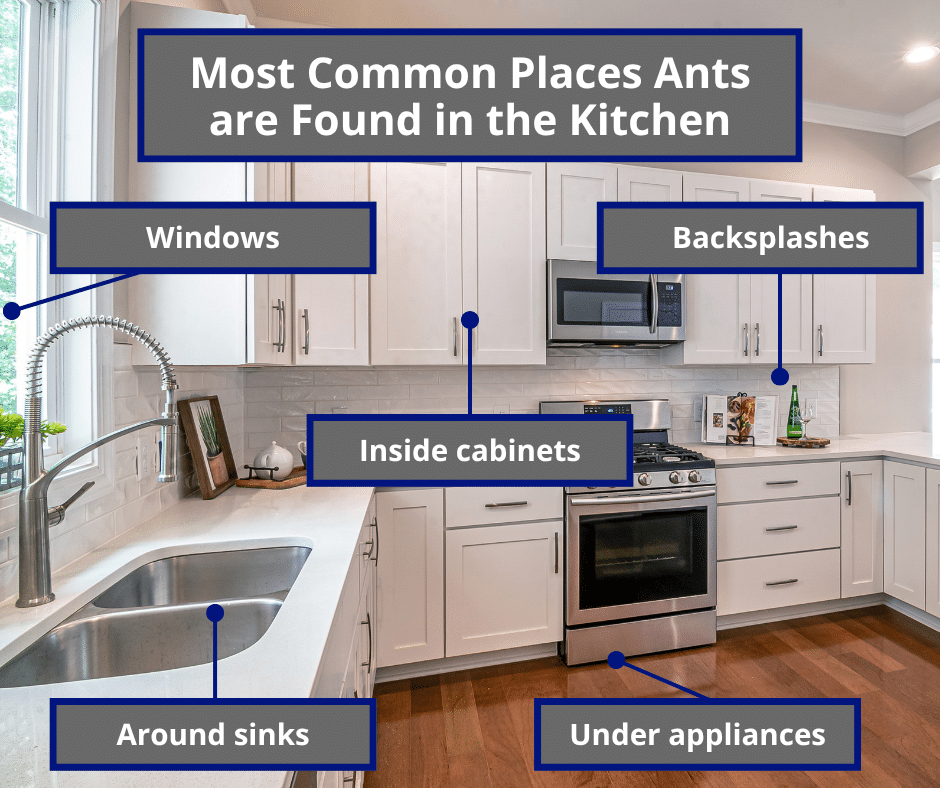
Steps to Reduce Ants in Your Kitchen
- Wipe down counters and floors daily, paying attention to crumbs near appliances and under cabinets.
- Store food in sealed, airtight containers, especially sugary or starchy items.
- Fix leaks promptly, including slow drips under the sink and around the dishwasher.
- Take out trash regularly and keep bins sealed.
- Seal visible entry points around windows, baseboards, and where pipes enter the wall, using caulk or an appropriate sealant.
- Trim vegetation touching the exterior wall near the kitchen. Branches and shrubs can act as a bridge for ants approaching the home.
- Avoid squishing visible ants and instead try to trace the trail, which can help identify where they are entering.
These steps reduce what is attracting ants and can meaningfully cut down on minor issues. For an established trail or a recurring problem, they usually are not enough on their own.
When DIY Methods Aren’t Enough
If you have cleaned thoroughly, sealed obvious entry points, and ants keep reappearing, the colony’s nest is likely somewhere you cannot easily reach. It’s possible the colony is inside a wall void, under the slab, or outside near the foundation. At that point, store-bought sprays and traps tend to only treat the visible symptom rather than the source.
What a Professional Ant Treatment Actually Involves
A professional visit typically covers more ground than a homeowner can reasonably manage alone:
- Species identification. A technician identifies the exact species present, since the treatment approach differs significantly between species.
- Inspection for entry points and conditions. This includes checking for moisture issues, vegetation contact, and structural gaps that a homeowner might not think to look for.
- Targeted treatment. Rather than a single blanket spray, treatment is matched to the species. Then, it’s applied where it will reach the colony, not just the visible trail.
- Follow-up and prevention guidance. Many pest control plans include a warranty period and guidance on maintaining conditions that discourage ants from returning.
This is the piece that is hardest to replicate with store-bought products alone. Matching the right treatment to the right species and applying it at the source, then following up if the first round does not fully resolve the issue.
When to Call a Professional
Consider bringing in a licensed pest control provider if:
- Ants keep returning despite consistent cleaning and sealing efforts.
- You cannot confidently identify the species you are dealing with.
- You notice ants that could be carpenter ants, since they can indicate a moisture or wood-damage issue worth investigating further.
- The trail appears to be coming from inside a wall, cabinet, or another inaccessible area.
Honor Services’ ant control services are built around correctly identifying the species involved and treating the colony at its source, not just the ants visible on your counter. If you are unsure what you are dealing with, our ant identification guide can help narrow it down before treatment.
Related Questions to Explore
- Why do ants suddenly appear in my kitchen overnight? A sudden appearance usually means a scout ant found a reliable food or water source and left a pheromone trail for the rest of the colony to follow. What looks sudden to you has often been building for a day or two as more ants join the trail.
- Do ants come back after cleaning? Yes, cleaning alone often is not enough if the colony’s nest and entry point remain untouched. Ants will keep sending scouts to check for food, and if any residue or an accessible entry point remains, they can return even after a thorough cleaning.
- What smells keep ants away from the kitchen? Some homeowners use scents like vinegar, cinnamon, or citrus as a deterrent, but these are generally only a temporary and partial solution. They do not address the underlying colony and are best used alongside, not instead of, proper cleaning and sealing.
- Are kitchen ants dangerous? Most common household ants are not dangerous to people, though they contaminate food and surfaces they walk across. Carpenter ants are the exception worth watching closely, since their presence can point to a moisture or wood-damage issue rather than posing a direct health risk.
- How long does it take to get rid of ants in the kitchen? This varies by species and how established the colony is. Surface-level issues can sometimes be resolved within days of consistent cleaning and sealing, while an established colony nesting indoors may take a professional treatment cycle of several weeks to fully resolve.
- Can ants damage my kitchen? Most common kitchen ants do not cause structural damage, but they do contaminate food and surfaces. Carpenter ants are the notable exception: they nest in moist or damaged wood and can contribute to structural issues over time, which is why identifying them correctly matters.
- Is it normal to see ants in the kitchen even in a clean house? Yes. Cleanliness reduces the food sources that attract ants, but it does not eliminate water sources, entry points, or nearby outdoor colonies. A spotless kitchen can still see ant activity if there is an accessible crack or a small moisture source nearby.
The Bottom Line
Ants show up in the kitchen because it offers food, water, and an easy way inside, and the ants you see are just the visible tip of a much larger colony. Cleaning and sealing entry points go a long way toward prevention, but a recurring trail usually means the colony itself needs to be addressed, not just the ants on your counter.
If ants keep finding their way into your Melbourne, FL kitchen no matter what you try, Honor Services can identify the species and the source, and build a treatment plan that actually works. Schedule your pest control service today.