Do you need a seawall inspection for your Brevard County property? If you own or plan to buy waterfront property here, the answer is almost always yes. A seawall inspection tells you whether that wall can still hold back water and soil before a storm, a sale, or a slow leak forces the question.
Honor Services performs dock and seawall inspections for homebuyers, sellers, and current owners across Melbourne and the Space Coast. This guide covers what we check, how often you need an inspection, the warning signs to watch for, and when to call a professional.
What Does a Seawall Inspection Cover?
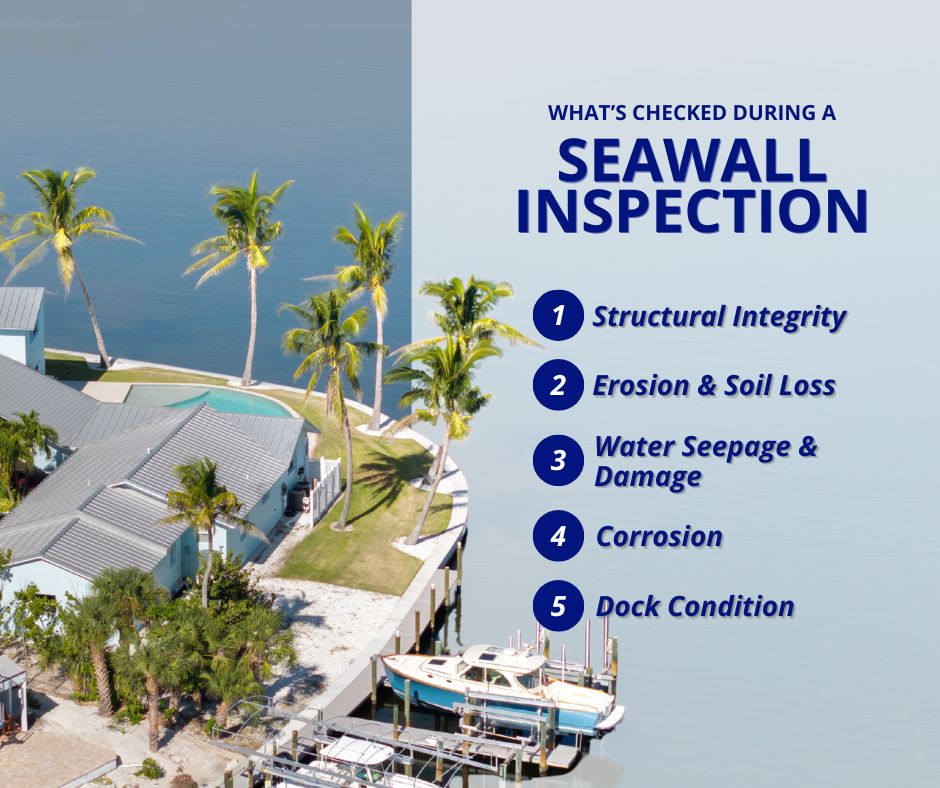
A seawall inspection is a visual, on-site assessment of the wall’s structural condition, from the cap down to the waterline and, where visible, below it. During a dock & seawall inspection, an inspector checks:
- Structural integrity of the wall itself: cracks, leaning, bowing, or shifting sections
- Erosion and soil loss behind or beneath the wall (a common early sign of trouble)
- Water seepage through joints, cracks, or panel seams
- Corrosion on any exposed rebar, tie-backs, or metal caps
- Dock condition, if a dock is attached, including decking, pilings, and any electrical or plumbing running out to it
An engineering survey goes further, using core samples or a diving inspection below the waterline. A seawall inspection stays practical. It focuses on what a buyer or owner needs to know, much like a home inspection, but scoped to the seawall and dock.
How Often Should You Have Your Seawall Inspected in Florida?
Schedule a seawall inspection every one to two years for most residential seawalls in Florida. Go annual if the wall faces heavy boat traffic, sits in a high-tide area, or has had repairs before.
Coastal engineers don’t all agree on one number. Some recommend annual inspections in harsh saltwater environments. Broader structural guidance from the American Society of Civil Engineers sets a floor of once every five years for coastal structures in general, then tightens that interval as a wall ages or shows wear.
Shorten your inspection interval if:
- The seawall is older than 20 years
- It has had repairs or patches before
- It sits in an area with regular boat wake, heavy tidal swings, or storm surge
- A named storm has moved through your area since the last check
Florida’s coastline keeps eroding year over year. That’s a documented, ongoing trend, not a one-time event. A single inspection from years ago won’t tell you much about today’s risk.
Signs Your Seawall May Need Repair
Don’t wait for a scheduled inspection if you notice any of these signs. Call for an assessment right away if you see:
- Visible cracks in the cap or wall face
- Soil loss or sinkholes forming behind the wall or in the yard near it
- Leaning or bowing sections that weren’t there before
- Rust staining on the concrete, which usually points to corroding rebar underneath
- Water seeping through the wall itself, rather than just topping it during high tide
Any one of these can mean the wall is losing its grip on the soil and water behind it. Waiting on repairs almost always raises the eventual cost.
Why Waterfront Home Buyers in Melbourne, FL Shouldn’t Skip This Inspection
Seawalls and docks cost real money to repair or replace, and problems don’t always show from the yard. A dock & seawall inspection gives you a clear picture of what you’re taking on before closing, not after.
It follows the same logic as getting a pre-listing inspection or a full home inspection: no surprises once you own the place.
Sellers benefit, too. Find out about a seawall issue before you list, and you can address it or price around it instead of letting a buyer’s inspector find it first.
Related Questions to Explore
- What does a seawall inspection include? A visual assessment of the wall’s structural condition, signs of erosion or soil loss, water seepage, corrosion of any exposed metal, and, if present, the attached dock’s decking, pilings, and utilities.
- How much does a seawall inspection cost? Pricing varies by property and whether a dock is included. Contact Honor Services for a quote specific to your property.
- How long do Florida seawalls last? It depends on material and maintenance. Many older concrete and steel seawalls in Florida date back to the state’s mid-20th-century development boom, and a lot of them have already outlasted their expected service life. That’s exactly why regular inspection matters more as a wall ages.
- Do I need a seawall inspection when buying a waterfront home? Yes. Most inspectors and real estate professionals recommend it. A seawall or dock in poor condition can mean a five- or six-figure repair, and you want to know that before closing, not after.
- Can I inspect my own seawall? You can check for obvious cracks or leaning yourself. But a professional inspection catches early-stage erosion, seepage, and corrosion that don’t show from the yard, and those are exactly the issues that turn into major repairs if you miss them.
When to Call a Professional
If you think your property requires professional evaluation, ask yourself the following:
- Have you spotted any of the warning signs above?
- Has it been more than one to two years since your last inspection?
- Are you buying or selling waterfront property in Melbourne, Palm Bay, Cocoa, Titusville, or elsewhere in Brevard County?
Any of these means it’s time to schedule a professional look. Honor Services brings at least two inspectors to every job and delivers same-day reports, so you get an answer fast.
Conclusion
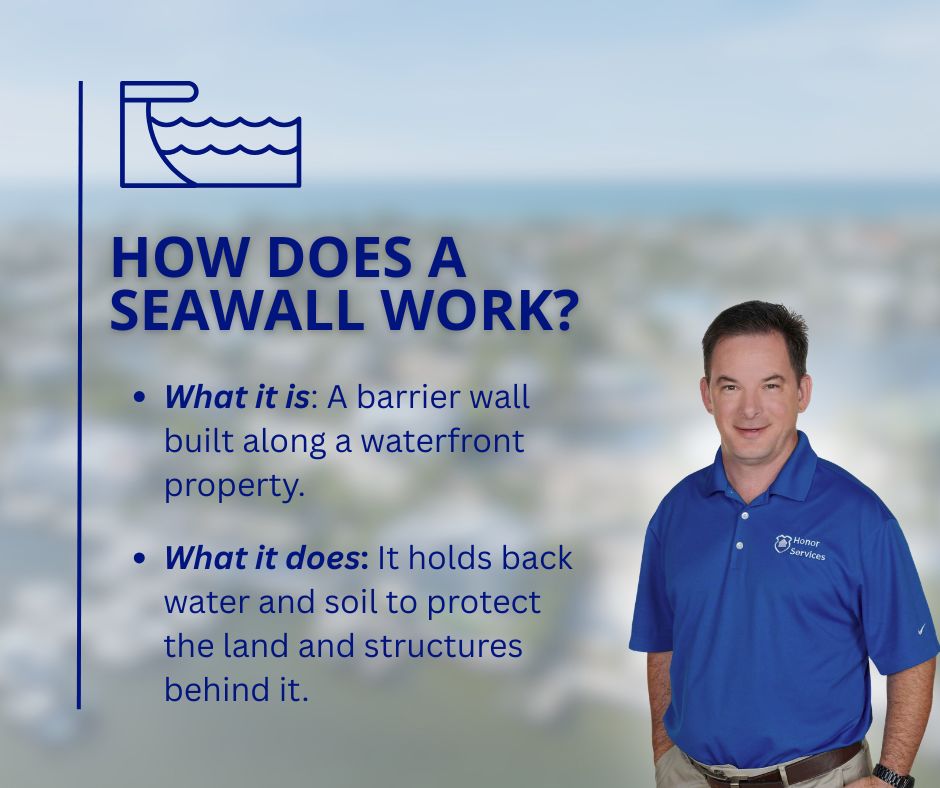
A seawall protects more than your view. It protects the land and structures behind it. The takeaways:
- Inspect residential seawalls every one to two years. Go more often if the wall is older, has had repairs, or sees heavy boat traffic and tidal swings
- Cracks, soil loss, leaning, rust staining, and water seepage all mean you need an inspection now, not later
- Buying or selling waterfront property in Brevard County? Add a dock & seawall inspection to your checklist alongside your standard home inspection
Ready to get your seawall checked? Schedule your dock & seawall inspection with Honor Services today.