Most Brevard County homes need pest control every one to three months, with quarterly service as the standard baseline and monthly visits recommended for high pest-pressure properties near water, woods, or older construction.
Florida’s warm, humid climate keeps pests active year-round, so “once and done” treatments rarely hold. Here’s how to figure out the right schedule for your home, what affects that timeline, and when it’s time to call in Honor Services.
What Determines How Often You Need Pest Control
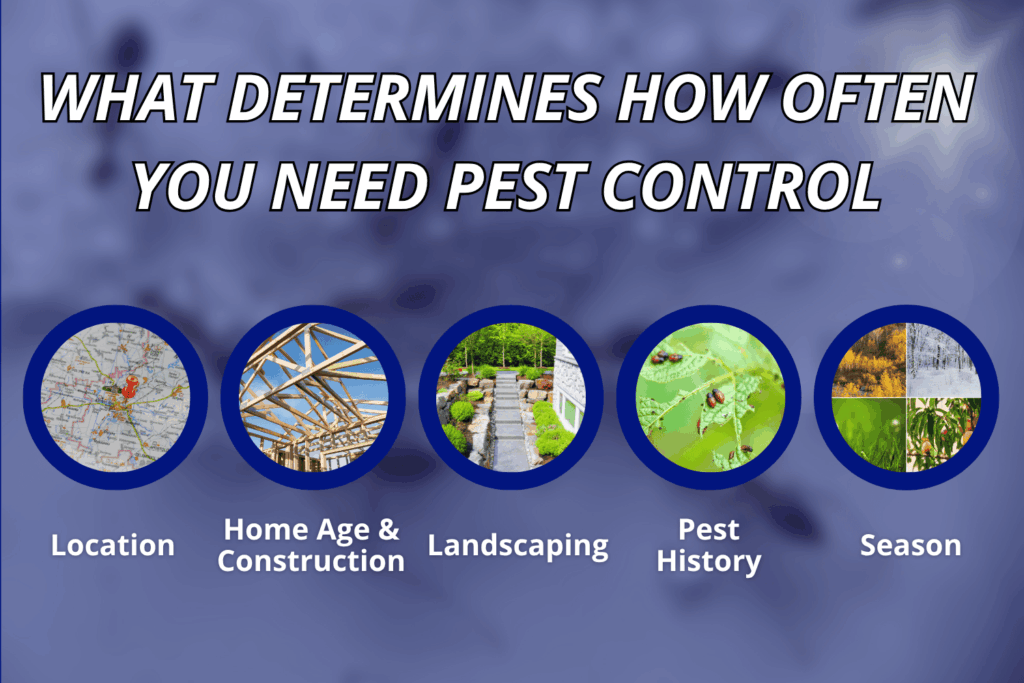
Your ideal pest control frequency depends on your property’s pest pressure, not a one-size-fits-all calendar. A few factors push most Melbourne-area homes toward more frequent service:
- Location. Homes near canals, wooded lots, or the Indian River Lagoon see more ants, roaches, and rodents seeking food and moisture.
- Home age and construction. Older homes with gaps around siding, soffits, or foundations give pests easier entry points.
- Landscaping. Mulch beds against the foundation, overgrown shrubs, or standing water in the yard all invite pests closer to the house.
- Pest history. A home with a past termite or roach problem needs closer monitoring than one with a clean record.
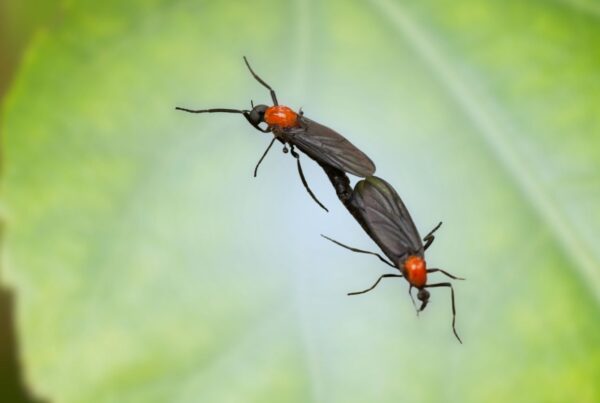
- Season. Spring and summer bring heavier ant, mosquito, and lovebug activity across Brevard County, while rodents move indoors as temperatures drop later in the year.
Monthly vs. Bi-Monthly vs. Quarterly Pest Control
The three most common service schedules each fit a different situation. Monthly service suits homes with heavy pest pressure or a recent infestation. Bi-monthly (every two months) is a common middle ground for moderate activity.
Quarterly service is the standard baseline for homes with lower pest pressure and a solid maintenance history.
| Schedule | Best for | What it covers |
|---|---|---|
| Monthly | High pest pressure, recent infestation, homes near woods/water | Fresh exterior barrier before pests get a foothold |
| Bi-monthly | Moderate pest activity | Balance of coverage and cost |
| Quarterly | Lower pest pressure, established prevention routine | Protective barrier through each seasonal shift |
If you’re not sure which fits your property, an Honor Pest Pro can walk your home, check for entry points and existing activity, and recommend a schedule instead of guessing.
Entomologists at the University of Florida’s Institute of Food and Agricultural Sciences (UF/IFAS) point to the state’s climate and rainfall as the reason local pest activity runs heavier than in most of the country, which is part of why Florida has the largest pest control market in the U.S. That’s a big reason Brevard County homes typically need a shorter interval between visits than homes in cooler, drier climates.
What Happens If You Skip Pest Control
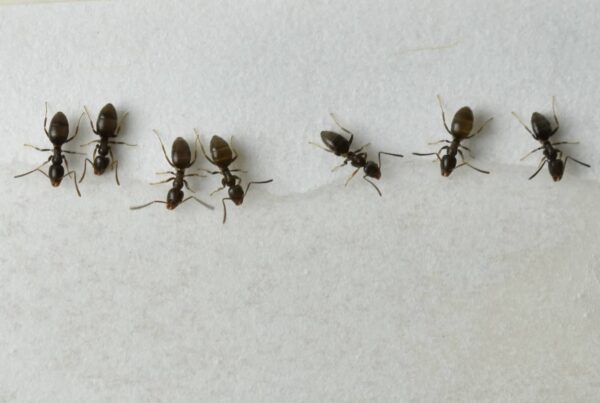
Skipping treatments doesn’t just mean you might see a bug. It gives pests time to establish themselves before anyone notices. Ants and roaches build colonies that get harder to eliminate the longer they’re left alone, and rodents that get inside can chew wiring or insulation before you spot the signs.
A gap of a few months between services is usually fine for low-pressure homes, but skipping service for a full season or longer often means starting over with a heavier initial treatment instead of simple maintenance.
What Happens During a Pest Control Visit
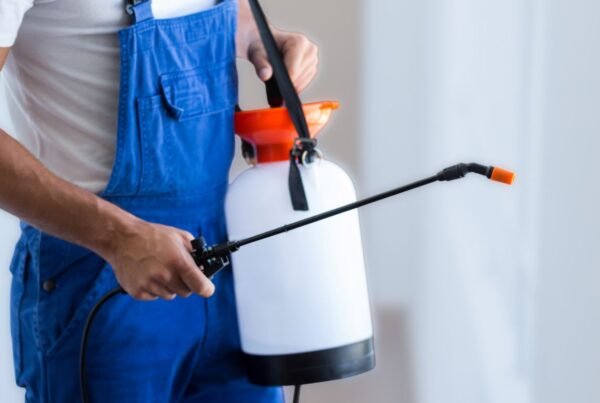
A typical general household pest visit starts with a walk-through of the interior and exterior to check for activity, entry points, and conditions like moisture or debris against the foundation. The technician then treats problem areas and applies an exterior barrier treatment around the home’s perimeter, knocks down cobwebs, and notes any follow-up needed.
Most companies, including Honor Services, don’t charge extra for a revisit if pests show up again before the next scheduled service.
Many pest control companies, Honor Services included, build treatment plans around Integrated Pest Management (IPM) principles from the EPA: looking at the pest, the conditions that attract it, and the least invasive way to solve the problem, rather than defaulting to the heaviest available treatment.
Signs You Need Pest Control More Often
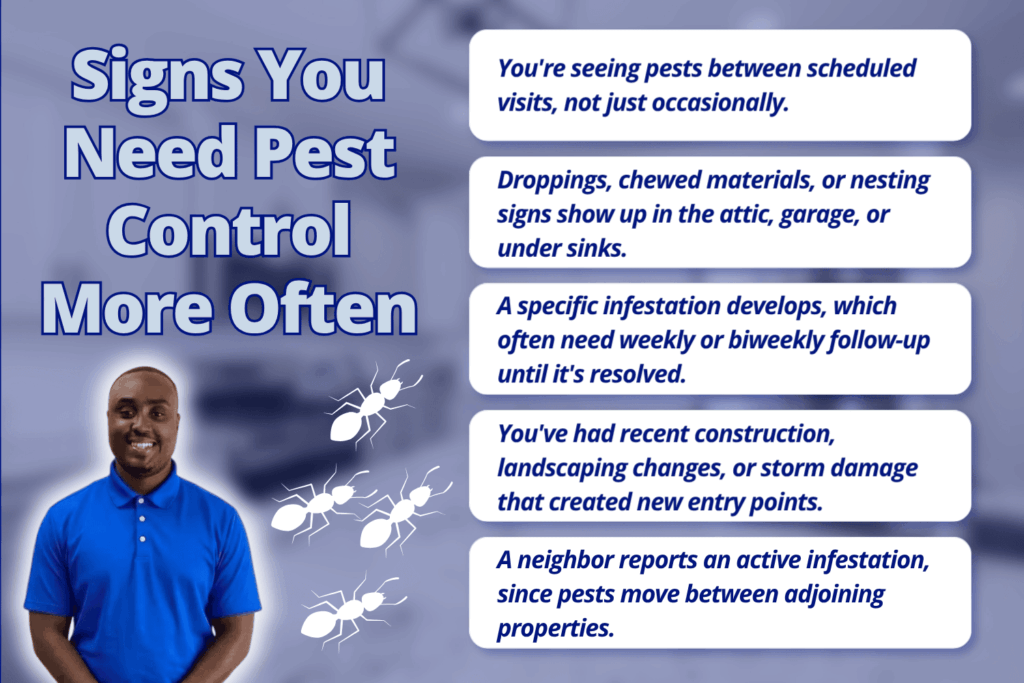
A set schedule is a starting point, not a fixed rule. Watch for signals that your home needs a shorter interval between visits:
- You’re seeing pests between scheduled visits, not just occasionally.
- Droppings, chewed materials, or nesting signs show up in the attic, garage, or under sinks.
- A specific infestation develops, like fleas, roaches, or fire ants, which often need weekly or biweekly follow-up until it’s resolved.
- You’ve had recent construction, landscaping changes, or storm damage that created new entry points.
- A neighbor reports an active infestation, since pests move between adjoining properties.
If two or more of these apply, it’s worth a call rather than waiting for your next scheduled visit.
Cost of Pest Control Services in Melbourne, FL
Pricing depends on your property size, pest pressure, and which package fits your home. Honor Services’ general household pest plans start at $40/month, with tiered packages that add fire ant spot treatment, mosquito control, or subterranean termite protection as needed. A neglected infestation, especially termites or rodents, often ends up costing far more in repairs than staying on a regular schedule would have.
Termites Need a Different Schedule
General pest control and termite protection aren’t the same service, and they don’t run on the same calendar. A home five years or older should have a termite inspection, since Florida’s climate makes wood-destroying organisms a much bigger risk here than in most of the country.
Subterranean termites can cause serious structural damage long before a homeowner notices any signs, which is why termite monitoring typically runs on its own schedule, often through a continuous baiting or monitoring system, rather than folding into your general pest visits.
Learn more about termite protection options in Brevard County.
How to Keep Pests Away Between Visits
Regular service works best alongside a few habits at home:
- Seal gaps around windows, doors, and where utility lines enter the house.
- Trim vegetation back from the exterior walls and roofline.
- Fix standing water in the yard, since it draws mosquitoes and other moisture-seeking pests. For more on keeping bugs out between visits, see our guide on how to keep insects out of the house in Florida.
- Store food and trash in sealed containers, especially in garages and outdoor kitchens.
None of this replaces professional treatment, but it stretches the effect of each visit.
Related Questions to Explore
Is monthly pest control worth it? For homes with consistent pest activity or a recent infestation, yes. Monthly visits keep the exterior barrier fresh and catch new activity before it spreads, which usually costs less over time than dealing with a full infestation.
Do I still need pest control if I don’t see bugs? Yes. Most pest activity happens out of sight, in wall voids, attics, and under structures, so regular service prevents problems rather than just reacting to them.
What’s included in a general household pest treatment? A typical visit includes an inspection, targeted treatment for the pests found or expected (ants, roaches, spiders, and similar common invaders), and an exterior barrier application. Learn more about general household pest treatment.
Does pest control frequency change with the seasons? Yes. Spring and summer bring heavier ant, lovebug, and mosquito activity in Florida, while rodent activity tends to pick up as temperatures cool later in the year. Some homeowners adjust their service frequency seasonally rather than sticking to one interval year-round.
Can I do pest control myself instead of hiring a professional? DIY products can handle small, isolated problems, but they rarely reach nesting sites or entry points the way a professional treatment does. A trained technician can also identify what pest you’re actually dealing with, which matters since treatments differ by species.
When to Call a Professional
If home remedies and store-bought products aren’t keeping up, or you’re seeing pests between scheduled visits, it’s time to bring in a professional. Honor Services serves Melbourne, Palm Bay, Cocoa, Titusville, and the rest of Brevard County with pest prevention plans built around what’s actually happening at your property.
If you’re dealing with an active infestation, a suspected termite issue, or want a second opinion on your current schedule, Honor Services will determine whether you need basic pest service or termite control for your home.
Conclusion
Pest control frequency isn’t one-size-fits-all. Quarterly service is a solid baseline for most Brevard County homes, while monthly or bi-monthly service fits homes with higher pest pressure. The biggest factor isn’t the calendar; it’s your property’s specific pest risk.
Ready to find the right schedule for your home? Schedule a free consultation with Honor Services and get a pest prevention plan built around your property, not a generic timeline.