A home inspection checklist for buyers is a list of what to check on a house before you close. It covers the roof, foundation, plumbing, electrical, HVAC, water damage, and pests. In Florida, it also covers wind mitigation, a four-point inspection, and a wood-destroying organism (WDO) report.
Honor Services inspects homes across Brevard County, FL. This guide walks through each item, shows the red flags, and explains when to bring in a specialist.
What Is a Home Inspection Checklist for Buyers?
It is a list of the systems and spots to check on a home you plan to buy. You use it to get ready for the inspection, ask better questions, and read the report with confidence.
A licensed inspector does the real inspection. The inspector reviews the home’s condition, flags what needs repair or replacement, and gives you a sense of how long the major systems have left.
HUD reminds buyers that an inspection only happens if you arrange one, because FHA does not do it for you. Your checklist does not replace the inspector’s work. It helps you follow along and spot what matters. For a plain-language overview, see what a home inspection is.
Honor Services sends two inspectors to every inspection. An average home takes about two hours, and the report arrives the same day.
Before the Inspection
A little prep makes the inspection more useful. Work through this list first:
- Check your contract. Look for an inspection contingency and its deadline. HUD notes that you may be able to make your contract depend on the inspection results.
- Book early. Schedule the inspection as soon as your offer is accepted. That leaves time for extra inspections if the first one finds something.
- Hire your own inspector. Pick someone who works for you, not for the seller. Here are tips on how to look for a home inspector.
- Plan to attend. You learn more by walking the house with the inspector than by reading the report alone.
- Ask for records. Request the seller disclosures, repair records, permits, and the age of the roof, AC, and water heater.
- Bring a phone or notebook. Take photos and write down questions as you go.
Exterior and Roof Checklist
Start outside. The outside of a house shows you how water, sun, and wind have treated it.
- Roof covering: Look for missing, curling, or cracked shingles, cracked tile, or rust on metal.
- Roof age: Ask how old the roof is and how much life it has left.
- Flashing: Check the metal around chimneys, vents, and roof edges for gaps or rust.
- Gutters and downspouts: Look for sagging, leaks, and downspouts that dump water at the foundation. Here is a guide to roof drainage and what goes wrong.
- Siding or stucco: Look for cracks, stains, and soft spots.
- Soffit and fascia: Check for peeling paint, rot, and gaps where pests can enter.
- Foundation and slab: Look for cracks, and check that the soil slopes away from the walls.
- Windows and doors: Check seals, frames, and screens.
- Porches and railings: Test that they are solid and not loose.
- Driveway, walkways, and pool area: Look for cracks, standing water, and trip hazards around the property.
Interior Checklist
Go room by room. Test what you can and take photos of anything odd.
Plumbing
- Run every faucet and flush every toilet. Check the water pressure.
- Look under sinks for leaks, stains, and soft cabinet floors.
- Find the water heater. Note its age and look for rust or leaks.
- Ask what the pipes are made of. Older homes can have pipe materials that wear out, so read about how long plumbing pipes last.
- Check the drains in sinks, tubs, and showers. Slow drains can point to a bigger line problem.
Electrical
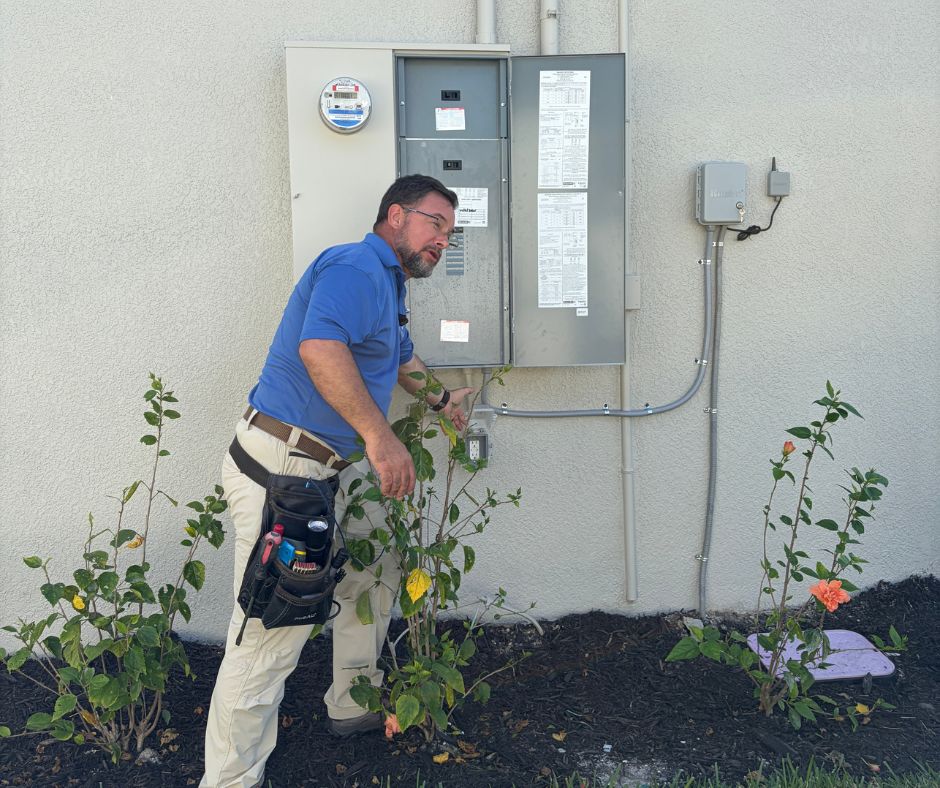
- Find the electrical panel. Look for scorch marks, rust, and loose or missing labels.
- Test outlets. Kitchens, bathrooms, and outdoor outlets should have GFCI protection.
- Ask about the wiring type. See whether aluminum wiring will pass inspection.
- Check that smoke and carbon monoxide alarms are present.
- Test the appliances that come with the house, such as the stove, dishwasher, and range hood.
HVAC
- Ask how old the AC and heating system is. Florida systems work hard.
- Check that air flows from every vent, and every room cools.
- Look at the drain line and the drain pan for water stains.
- Check the air filter and the outdoor unit.
Attic, walls, floors, and windows
- Look in the attic for stained wood, loose insulation, poor ventilation, and signs of pests.
- Most Florida homes sit on a slab and have no basement. If the home has a crawlspace, check it for moisture and pests.
- Check ceilings and walls for stains, bubbling paint, and cracks.
- Walk the floors. Soft spots and slopes need a closer look.
- Open and close windows and doors. They should move easily and lock.
- Check kitchen and bathroom caulk, exhaust fans, and any soft flooring.
Florida-Specific Checklist Items
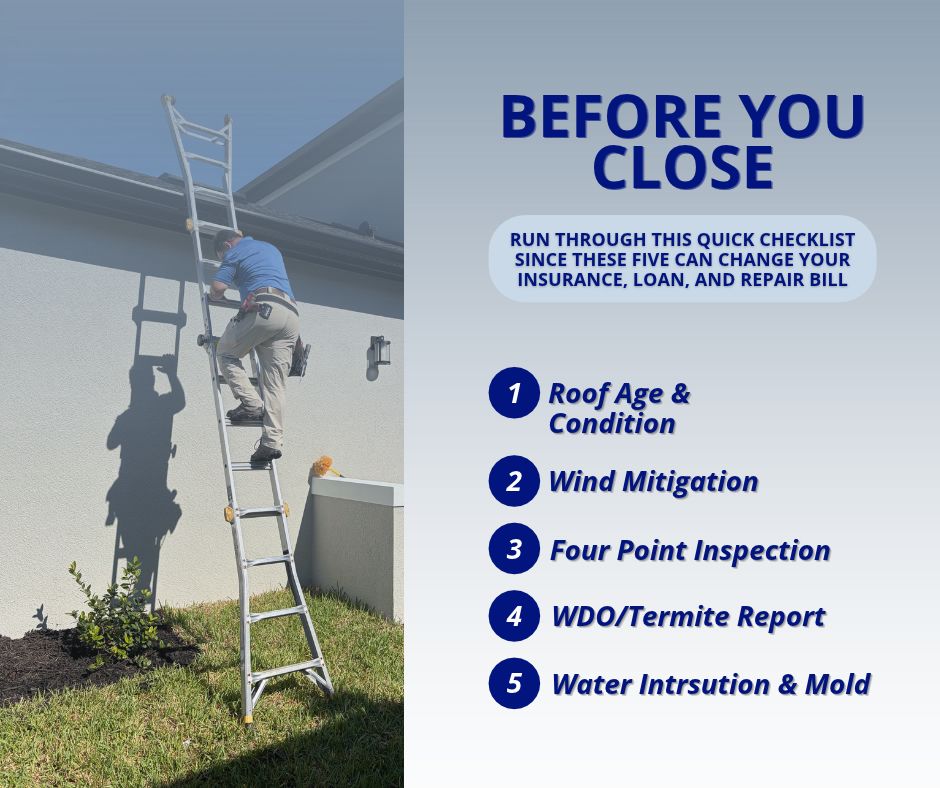
National checklists miss these items. In Florida, they can change your insurance, your loan, and your repair bill.
Roof age and condition
Many insurers ask about roof age and condition. A roof near the end of its life can make coverage harder or more costly to get. Ask for the roof’s age and permits. A roof certification gives you a written look at its remaining life.
Wind mitigation inspection
A wind mitigation inspection records the features that help your home resist wind, such as roof shape and shutters.
The Florida Department of Financial Services says the inspector documents these on a state form, and you give that form to your insurer to see which discounts you qualify for. Learn what a wind mitigation inspection is.
Four-point inspection
A four-point inspection looks at four systems: the roof, electrical, plumbing, and HVAC. Insurers often ask for one on older homes before they offer a policy. Read what a four-point inspection is.
WDO (termite) inspection
A WDO inspection looks for termites and other wood-destroying pests. Many lenders ask for one in Florida. Look for mud tubes, hollow-sounding wood, and damaged trim.
Water intrusion and mold
Florida humidity makes moisture a daily fact of life. Look for stains, musty smells, and soft drywall. An inspector can use moisture meters and thermal imaging to find water you cannot see. Read about water intrusion and how to prevent it.
Flood zone and storm history
Ask whether the home sits in a flood zone and whether flood insurance is required. Ask about past storm damage and insurance claims. Your lender and insurance agent can confirm the details.
Sewer scope
A camera inspection of the main sewer line can find cracks, roots, and breaks that a standard inspection cannot see. It is worth asking about on older homes. See the sewer scope inspection service.
What to Check, Red Flags, and Who to Call
Use this table as a one-page cheat sheet.
| System | What to check | Red flag | Who to call |
| Roof | Age, shingles or tile, flashing | Curling or cracked material, stains, daylight in the attic | Licensed roofer or roof inspector |
| Foundation | Cracks, doors that stick, slope of the soil | Wide or growing cracks, uneven floors | Structural engineer |
| Plumbing | Pressure, leaks, pipe material | Active leaks, slow drains, failing pipe types | Licensed plumber, sewer scope |
| Electrical | Panel, outlets, wiring type | Scorch marks, aluminum wiring, DIY work | Licensed electrician |
| HVAC | Age, airflow, drain line | Weak cooling, water stains, rust | HVAC contractor |
| Water and mold | Stains, odor, humidity | Musty smell, soft drywall | Mold assessor, thermal imaging |
| Pests | Wood, trim, mud tubes | Damaged wood, mud tubes | WDO inspector or pest control company |
Red Flags That Should Slow You Down
Some findings need a second opinion before you commit. Watch for these:
- Active leaks or fresh water stains under the roof.
- Signs of termites, such as mud tubes or hollow wood.
- A musty smell or soft, bubbling drywall.
- Wide or growing cracks in the slab or walls.
- DIY electrical work, scorched outlets, or a mismatched panel.
- Big repairs with no permits.
- A roof near the end of its life.
- An AC system that does not cool.
A red flag does not always mean you should walk away. It means you should get a specialist’s opinion and price the fix before you close.
After the Inspection: Read the Report and Decide
Read the summary first, then the details. Sort the findings into three groups: safety problems, major systems, and routine upkeep. Safety problems and major systems matter most for your decision.
Then decide what to ask for. This is the negotiation step. Depending on your contract, you can ask the seller to fix items, give a credit, lower the price, or you can walk away. Your agent can explain your options.
Some buyers also check whether a home warranty makes sense, and this guide explains whether you need a home warranty inspection.
If something breaks soon after you move in, read about what to do when something breaks after a home inspection.
Related Questions to Explore
- What do home inspectors look for? Inspectors check the roof, structure, exterior, plumbing, electrical, HVAC, attic, and interior. They look for safety issues, damage, and systems that are wearing out. Start with this guide to the home inspection process.
- What should I ask my home inspector? Ask what the biggest concerns are, which repairs are urgent, how old the major systems are, and which items need a specialist. Ask what the inspection does not cover. These tips can help you choose a home inspector.
- What should a buyer do during a home inspection? Attend if you can. Walk the house with the inspector, ask questions, and take photos and notes. Stay out of the way during testing, and save big questions for the walk-through at the end.
- How do I prepare for a home inspection? Confirm access to the attic, the electrical panel, and the utilities. Make sure the power, water, and gas are on. Review the seller’s records and your contract deadline. See how to prepare for a home inspection.
- How long does a home inspection take? An average home takes about two hours with Honor Services. Larger or older homes, and add-on inspections such as WDO or a sewer scope, can take longer.
- How much does a home inspection cost? Cost depends on the size and age of the home and on any add-on inspections. Find out how much a home inspection costs before you book.
When to Call a Professional
A general inspection spots problems. A specialist tells you how serious they are and what they cost to fix. Bring one in when you see:
- Signs of termites or other wood-destroying pests.
- A musty smell, stains, or soft drywall that could mean mold or water intrusion.
- An old or damaged roof, or an insurer asking for roof proof.
- A request from your insurer for a four-point or wind mitigation report.
- An older home with an unknown main sewer line.
- Electrical, plumbing, or HVAC findings that need a licensed repair.
Conclusion
Honor Services handles home inspections, four-point and wind mitigation inspections, roof certification, WDO and termite inspections, mold testing, and sewer scopes in one place. That saves you from coordinating several companies during a tight closing. For repairs, see the list of recommended trade professionals.
- A good checklist covers the roof, foundation, plumbing, electrical, HVAC, water, and pests.
- In Florida, add roof age, wind mitigation, a four-point inspection, and a WDO report.
- Treat red flags as a reason to ask a specialist, not as an automatic deal breaker.
Ready to buy with confidence? Schedule a home inspection with Honor Services in Brevard County, or learn more about our home inspection service.