The right way to get rid of mosquitoes in your backyard is to remove breeding sources, reduce what attracts them, and use targeted treatments that stop mosquitoes at every stage of their life cycle. Killing a few adult mosquitoes helps, but long-term control starts with prevention and consistent action.
If you have tried sprays, candles, or home remedies and still get bitten, you are not alone. Mosquito control is more strategic than most homeowners realize. This guide breaks it down step by step.
Why Mosquitoes are so Hard to Eliminate in Backyards
Mosquitoes multiply fast, which is why quick DIY fixes rarely work. A single female mosquito can lay 50 to 200 eggs at a time, and she can do this up to three times during her short lifespan. That means hundreds of new mosquitoes can develop from just one.
Swatting adults or using short-term repellents only treats what you see. Meanwhile, new mosquitoes may already be hatching nearby.
Because most mosquitoes stay close to where they hatch, repeated mosquito activity usually means there is an active breeding source in or near your yard. Lasting control requires stopping mosquitoes at the source, not just killing adults.
What Attracts Mosquitoes to Your Backyard?
Understanding why mosquitoes choose your yard helps you control them more effectively. Most mosquito problems are caused by common conditions that many homeowners overlook.
Standing Water You May Not Notice
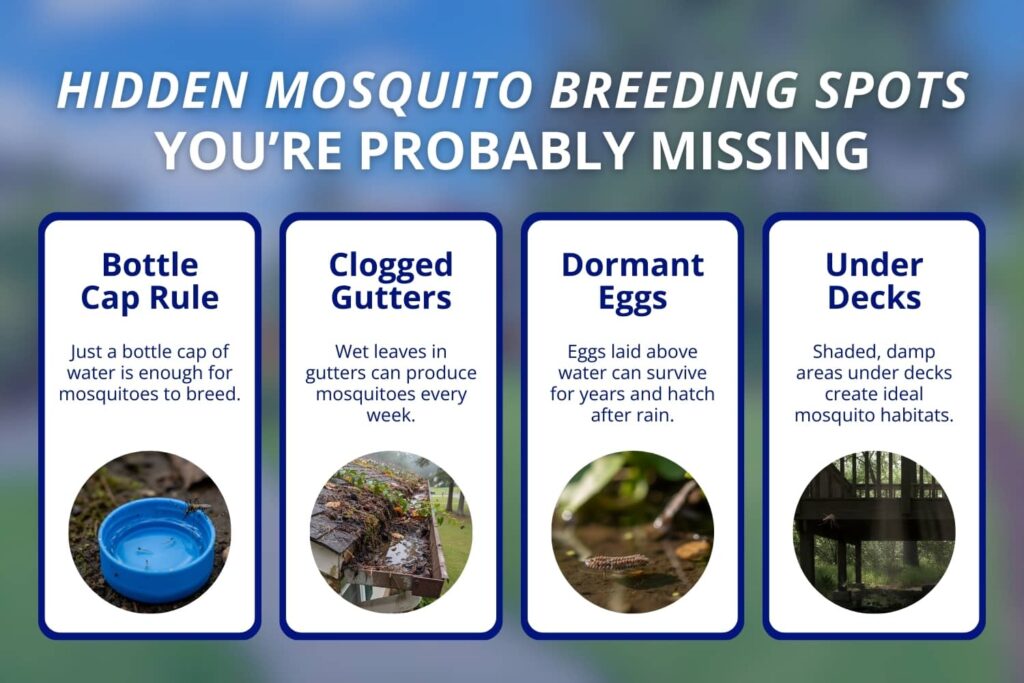
Mosquitoes do not need ponds or pools to breed. They lay eggs in small amounts of still water that often go unnoticed, including:
- Clogged gutters, where leaves and debris trap moisture
- Plant saucers, which can hold water for days after watering
- Buckets or toys left outside, especially after rain
- Birdbaths, if the water is not changed regularly
- Low spots in the yard, where water collects and drains slowly
Even water that sits for just a few days can become an active breeding site.
Shade and Thick Landscaping
Mosquitoes prefer cool, shaded areas during the day to rest and avoid heat. Overgrown shrubs, tall grass, and dense landscaping provide ideal hiding places close to people and pets.
Yards with limited airflow and heavy shade often see higher mosquito activity.
People and Pets
Mosquitoes are attracted to carbon dioxide, body heat, and sweat. Backyards with frequent outdoor activity, pets, or gatherings naturally attract more mosquitoes, especially during warm, humid weather.
The more time spent outside, the more likely it is that mosquitoes will stay nearby.
How to Get Rid of Mosquitoes in Your Backyard at the Source
The most effective way to reduce mosquitoes is to stop them before they become adults. That starts with identifying and treating breeding areas around your yard.
The steps below focus on prevention, not just temporary relief.
| Source Control Step | What to Do | Why It Matters |
|---|---|---|
| Eliminate standing water | Check your yard weekly and remove standing water from containers, especially after rain. | Mosquitoes lay eggs in still water. Removing these sources stops new mosquitoes from developing. |
| Improve drainage | Address areas of the yard that stay wet by improving drainage or leveling low spots where water collects. | Standing water in soil can support mosquito breeding even when no visible puddles remain. |
| Target larvae early | Treat known breeding areas before mosquitoes reach adulthood. | Larval control prevents mosquitoes from ever becoming biting adults and is key to long-term control. |
Stopping mosquitoes at the source reduces the number of adults present in your yard.
When these steps are done consistently and paired with targeted treatments, mosquito populations are much easier to control over time.
What Actually Works for Backyard Mosquito Control
Mosquito control works best when you focus on proven methods that reduce mosquitoes at the source and keep pressure on the population over time.
The options below separate strategies that deliver real, repeatable results from common fixes that only provide short-term relief.
Methods that Help
- Removing standing water consistently
- Trimming back dense vegetation
- Targeted treatments that reduce adult mosquitoes
- Larval control in problem areas
- Routine treatments during mosquito season
These methods work best when combined instead of used alone.
Methods that do Not Solve the Problem
- Citronella candles and torches
- Ultrasonic devices
- One-time sprays
- Random home remedies
These may offer temporary relief in a small area, but they do not address breeding or long-term population control.
When DIY Mosquito Control is Not Enough
DIY mosquito control can help reduce activity, but it often falls short when mosquitoes are breeding faster than home remedies can manage. If the problem keeps coming back, it may be time to consider professional help.
You may need professional mosquito control if:
- Mosquitoes return quickly after rain: Rain creates new breeding sites, and if mosquitoes reappear within days, there is likely an active source that DIY methods are not addressing.
- You avoid using your yard because of bites: When mosquitoes prevent you from enjoying outdoor spaces, the population is usually high enough that surface-level solutions are no longer effective.
- You have tried multiple products with little success: Sprays, traps, and repellents often provide temporary relief but do not stop the breeding cycle, especially when used inconsistently.
- Mosquitoes are active all day, not just at dusk: Increased daytime activity often signals a larger or more established mosquito population that requires targeted treatment.
Beyond the nuisance, mosquitoes can also pose health risks. Public health agencies note that mosquitoes are capable of spreading diseases such as West Nile virus and other mosquito-borne illnesses.
Reducing mosquito populations is not only about comfort but also about helping protect your household.
How Professional Mosquito Control Treats the Problem Long-Term
Professional mosquito control goes beyond general spraying by combining inspection, targeted application, and seasonal follow-up to interrupt the mosquito life cycle.
The goal is not just fewer bites today, but a consistent reduction week after week by treating where mosquitoes rest, hide, and breed.
1) Property inspection
A trained technician looks for breeding areas, resting spots, and conditions that attract mosquitoes. Many of these areas are easy to miss without experience.
2) Targeted treatments
Professional treatments are applied where mosquitoes live and breed, not just where they fly. This includes shaded areas, foliage, and moisture-prone zones.
3) Ongoing maintenance
Mosquito control works best as a recurring service during peak mosquito season. Regular treatments help break the breeding cycle and keep populations low.
Professional programs are designed to be effective while remaining mindful of families, pets, and outdoor spaces.
How Long It Take to See Results After Treatment
After a professional mosquito treatment, many homeowners begin to notice fewer mosquitoes within 24 to 48 hours.
This initial reduction happens as adult mosquitoes are targeted in the areas where they rest and feed.
Full results can vary based on several factors, including:
- Weather conditions, which can affect how long treatments remain effective
- Amount of rainfall, since rain can create new breeding sites
- Size and layout of the yard, as larger or heavily landscaped areas may need more coverage
- Nearby breeding sources, such as standing water on neighboring properties
While one treatment can provide noticeable relief, mosquito control works best over time.
Consistent, seasonal treatments help break the breeding cycle and deliver more reliable, long-term control for your yard.
How to Keep Mosquitoes from Coming Back
Once you’ve lowered mosquito activity, the next step is preventing a rebound—because even small changes like rain, clogged gutters, or overgrown shade can restart breeding fast. These simple habits help you maintain results and keep your yard protected throughout mosquito season.
Simple habits that help
- Empty standing water weekly
- Keep gutters clean
- Trim shrubs and tall grass
- Fix outdoor drainage issues
Stay ahead of mosquito season
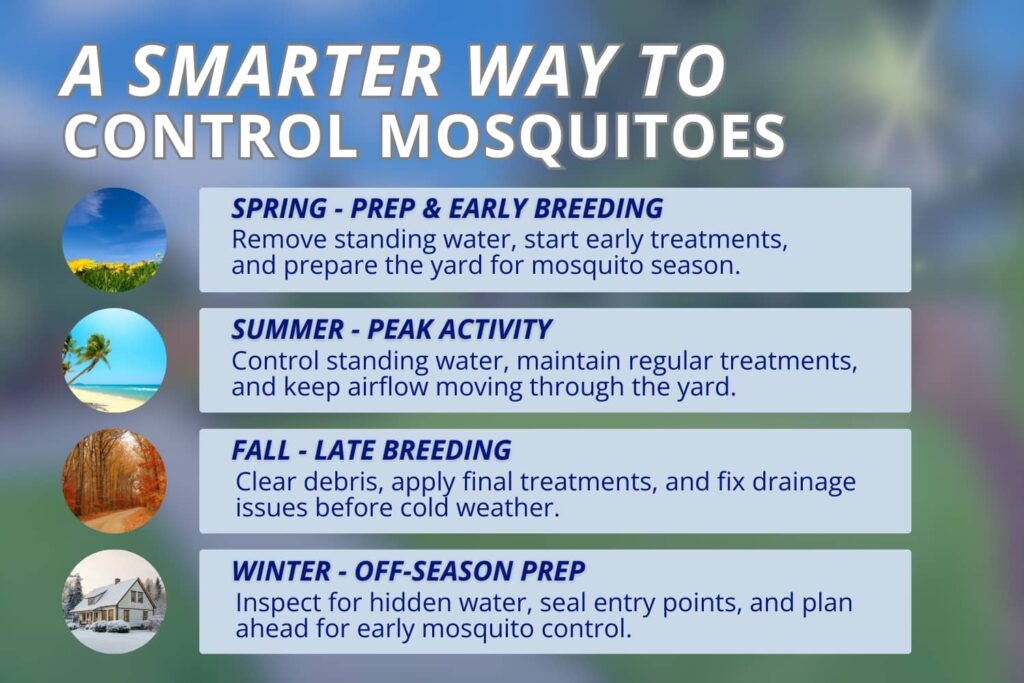
Mosquitoes are most active in warm months. Starting control early in the season helps prevent population spikes later.
Ongoing mosquito services work best when paired with basic yard maintenance.
Related Questions
Why are mosquitoes worse after it rains?
Rain creates fresh breeding sites by filling containers, low spots, and hidden areas with standing water. Mosquito eggs can hatch in just a few days, which is why populations often spike shortly after rainfall. Warm, humid conditions after rain also make it easier for mosquitoes to survive and spread.
Are mosquito treatments safe for kids and pets?
When applied by trained professionals, mosquito treatments are designed to be used safely around families and pets. Treatments are applied to targeted areas rather than open spaces, and homeowners are given clear instructions on when it is safe to re-enter treated areas. Following these guidelines helps ensure effective and responsible control.
How often should mosquito treatments be done?
Most yards benefit from treatments every few weeks during peak mosquito season. Weather, rainfall, and yard conditions can affect how long treatments last. Regular service helps maintain consistent control and prevents mosquitoes from rebuilding their population.
Do mosquito treatments harm beneficial insects?
Professional mosquito control focuses on areas where mosquitoes rest and breed, such as shaded foliage and damp zones. This targeted approach helps limit exposure to beneficial insects like pollinators, which are less likely to be active in treated areas. Responsible application plays an important role in protecting the surrounding environment.
What time of year is best for mosquito control?
Mosquito control is most effective when it starts early in the season, typically in spring, before populations grow. Continuing treatments through warmer months helps keep mosquitoes in check. The exact timing depends on local climate and weather patterns.
Conclusion
Mosquito control is most effective when it is proactive, not reactive. Removing breeding sites, reducing attractants, and using targeted treatments all work together to protect your outdoor space.
If mosquitoes are keeping you from enjoying your yard, a professional inspection can help identify the cause and the best solution.
Honor Services offers professional mosquito control designed to protect your yard, your family, and your peace of mind. If you want lasting relief instead of temporary fixes, reach out to schedule an evaluation and take the first step toward a mosquito-free backyard.