
There is something incredibly satisfying about a home that feels refreshed from corner to corner. It is the feeling you get when you walk in and breathe clean air, see clear surfaces, and know that every room has been touched with intention.
Whether you are preparing for a move, managing seasonal allergies, or giving your home a reset, this checklist guides you through a true top-to-bottom deep clean.
In Florida, where humidity stays high for much of the year, and pollen bursts arrive each season, regular deep cleaning does more than improve appearances. The EPA notes that indoor air can be two to five times more polluted than outdoor air, and Florida’s moisture-rich climate creates the perfect conditions for mold growth that can start in as little as 24 to 48 hours.
This checklist helps reduce those risks while keeping your home feeling welcoming year-round.
Mindset and Preparation
Deep cleaning an entire home is a big project, but the right approach makes it manageable and even enjoyable.
Start with the essentials:
- Gather microfiber cloths, a vacuum, a mop, a bucket, gloves, scrub brushes, and surface-specific cleaners.
- In humid regions like Melbourne and across Brevard County, include mold-safe cleaners for bathrooms, kitchens, and laundry areas where moisture builds up quickly.
Add a few helpful tools:
- A toothbrush for tight corners
- A squeegee for windows
- A duster for ceiling fans that collect extra pollen during Florida’s spring season
- Keeping everything ready reduces unnecessary stopping and starting.
Choose a realistic plan:
- Clean one room per day or tackle the whole home over a weekend.
- Pace yourself based on your schedule.
- Expect high-traffic areas to need more attention since Florida homes often have windows open during cooler months, bringing in extra dust.
Bring the right mindset:
- Enjoy the sense of progress as each room begins to feel lighter and fresher.
- Play your favorite music.
- Open windows when the weather is dry.
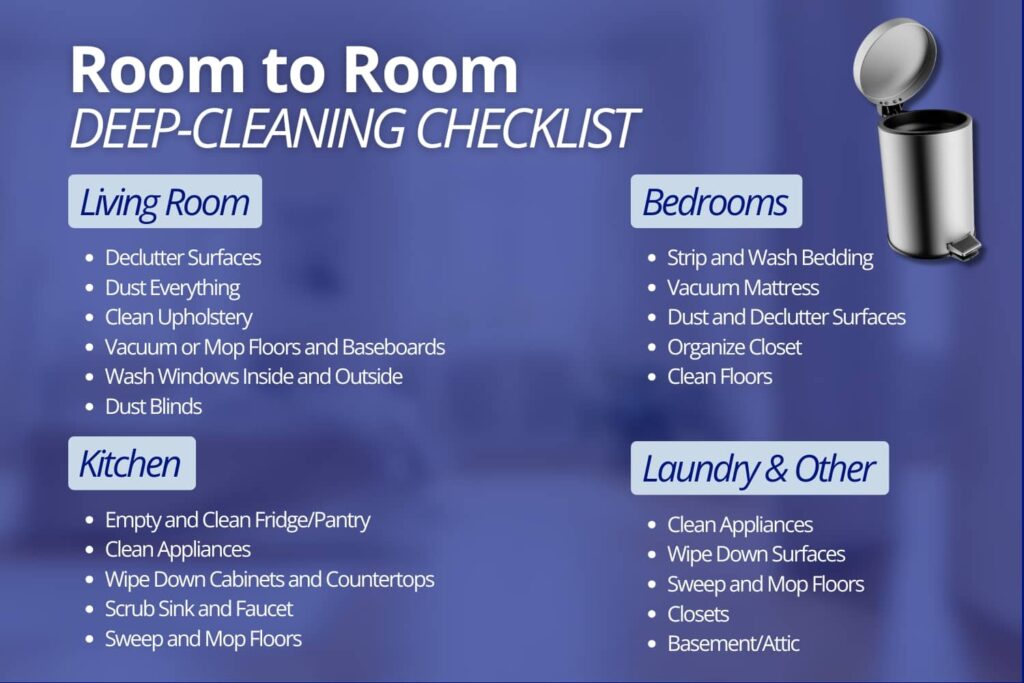
Living Room
- Declutter Surfaces: Remove unnecessary items from tables and shelves. Donate or store belongings you no longer use. Clutter collects dust, and dust levels rise quickly during Florida’s early summer pollen waves.
- Dust Everything: Use a microfiber cloth to dust shelves, electronics, frames, vents, and ceiling fans. Dusting from top to bottom prevents particles from resettling. Brevard County homes often run ceiling fans year-round, which means fan blades hold more dust and pollen than most homeowners realize.
- Clean Upholstery: Vacuum upholstered furniture thoroughly, including crevices. If you live near the coast, salt air can settle into fabrics, so occasional deep cleaning helps preserve their lifespan. Treat stains with fabric-safe cleaners.
- Vacuum or Mop Floors: Move furniture to clean underneath. Mop hard floors with a cleaner suited for your flooring type. Pay attention to baseboards because Florida humidity encourages dust to cling to edges more quickly.
- Wash Windows: Clean windows, sills, and tracks. Salt and pollen accumulation can build faster seasonally, especially in spring and after stormy weather. Vacuum or wash curtains and dust blinds.
Kitchen
- Empty and Clean Fridge and Pantry: Remove everything, discard expired items, and wipe down shelves. A simple baking soda and water solution helps control odors. Florida’s warm weather can make food spoil faster, so seasonal pantry checks are helpful.
- Clean Appliances: Clean the oven, microwave, and stovetop thoroughly. Run your dishwasher with vinegar to reduce buildup. Humidity can trap odors inside appliances, so regular deep cleaning keeps them fresh.
- Wipe Down Cabinets and Countertops: Use gentle cleaners for cabinets and disinfectant for countertops. Handles and knobs are high-touch areas and collect bacteria more often than expected.
- Scrub Sink and Faucet: A baking soda paste helps lift grime from stainless steel sinks. Faucets in Florida homes sometimes develop mineral buildup due to local water conditions, so polish as needed.
- Sweep and Mop Floors: Focus on corners and under appliances since crumbs attract pests. Florida’s warm months can increase ant activity, so keeping the kitchen spotless is a strong preventive measure.
Bathrooms
- Scrub Shower and Tub: Use strong cleaners for soap scum and mildew. A mix of vinegar and baking soda can help clean grout. Because Florida humidity stays high most of the year, shower walls and grout lines benefit from more frequent deep cleaning to prevent mold growth.
- Clean Toilet, Sink, and Faucet: Use disinfectants to clean all surfaces. Scrub the toilet thoroughly and wipe the base. Hard water stains are common in Florida, so focus on faucets and handles.
- Polish Mirrors and Fixtures: Use glass cleaner on mirrors and a multi-surface cleaner for fixtures. Shiny surfaces help the whole bathroom feel instantly cleaner.
- Declutter and Wipe Cabinets: Remove expired products and wipe shelves. Humidity can cause bottles and containers to get sticky at the base, so clean underneath them.
- Clean Floors and Tiles: Scrub grout lines and use a disinfectant safe for bathroom flooring. Florida bathrooms often see more moisture because of frequent showers and warm weather, so drying floors afterward helps prevent mildew.
Bedrooms
- Strip and Wash Bedding: Launder all sheets, pillowcases, and duvet covers. Consider washing pillows and mattress covers as well.

- Vacuum Mattress: Use an upholstery attachment to vacuum your mattress. Flip or rotate it to help it wear evenly.
- Dust and Declutter Surfaces: Dust nightstands, dressers, and shelves. Florida pollen seasons can bring fine yellow dust indoors, so dusting is important even if surfaces look clean.
- Organize Closet: Sort clothes and donate items you no longer wear. Wipe shelves and vacuum the closet floor.
- Clean Floors: Vacuum carpets or sweep and mop hard floors. Dust under the bed, where allergens build quickly.
Home Office
- Clear and Clean Desk: Remove everything from your desk, then dust the surface and your equipment. Electronics in Florida homes tend to attract more dust due to constant HVAC use during warm months.
- Dust Electronics: Use safe screen cleaners and microfiber cloths. Pay attention to vents on computers and printers where dust collects fastest.
- Organize Papers and Supplies: Sort and file papers. Shred what you no longer need.
- Clean Shelves and Storage: Dust books and wipe down storage bins.
- Vacuum or Mop Floors: Clean around and under your desk. If you use a chair mat, clean both sides.
Hallways and Entryways
- Declutter and Organize: Put away shoes, jackets, and bags. Entryways in Florida often collect sand from beaches and pollen from outdoors.
- Dust Light Fixtures and Trim: Wipe overhead lights, trim, decor, and baseboards.
- Clean Doors and Handles: Disinfect doorknobs and handles regularly. High traffic areas collect germs quickly.
- Vacuum or Mop Floors: Clean floors thoroughly, especially during rainy months when dirt is tracked inside more frequently.
Laundry Room
- Clean Appliances: Wipe the washer and dryer exterior. Clean the washer drum and dryer lint trap. Lint build-up is a fire hazard, and the National Fire Protection Association reports that dryers cause nearly 16,000 fires per year in the United States.
- Organize Supplies: Neatly arrange detergents and tools. Use bins or baskets when needed.
- Wipe Down Surfaces: Clean countertops, shelves, and storage areas. Florida humidity can cause detergent spills to get sticky faster, so check corners and edges.
- Sweep and Mop Floors: Remove lint and mop the area to prevent mildew.
Other Areas
- Closets: Sort stored items and declutter. Vacuum or mop the floor and dust shelves.
- Basement or Attic: If applicable in your home, tidy stored items, remove cobwebs, and clean floors. Many Florida homes do not have basements, so attics often hold more stored belongings than expected.
- Outdoor Spaces: Sweep patios, clean outdoor furniture, and rinse spaces lightly after pollen-heavy seasons. Clean exterior windows and check gutters. Before hurricane season, ensure gutters and downspouts are clear so water flows properly.
Regular Maintenance Tips
Keeping up with smaller tasks throughout the month helps prevent dirt, allergens, and moisture from building up. These simple habits make deep cleaning easier and keep your home feeling healthy and comfortable year-round.
| Frequency | Tasks |
|---|---|
| Daily | Wipe kitchen counters and dining tables. Sweep or vacuum high traffic areas. Tidy clutter in common rooms. |
| Weekly | Clean bathroom sinks, mirrors, and toilets. Dust surfaces and electronics. Change bed linens. Mop kitchen and bathroom floors. |
| Monthly | Dust ceiling fans, vents, and light fixtures. Vacuum furniture and under cushions. Clean microwave and oven interiors. Wipe cabinet fronts. |
| Seasonally | Wash or vacuum window treatments. Rotate and flip mattresses. Deep clean carpets or rugs. Organize closets and donate unused items. Check for moisture in bathrooms and kitchens during humid months. |
Even if you live outside Florida, these habits stay useful. You can adjust based on your climate, such as winterizing entry points or adding gutter cleaning in snowy regions.
No matter where you live, consistent upkeep keeps your home cleaner, healthier, and easier to manage.
When to Call a Professional
Deep cleaning and home inspections work best together. A professional deep clean before an inspection can help uncover issues like moisture buildup, mold, or staining that may need attention before selling or negotiating.
After an inspection or move, professional cleaning helps reset the space by removing dust, debris, and leftover residue, giving homeowners a clean starting point and added peace of mind.
Related Questions
How often should I deep clean my home?
Every three to four months is ideal for keeping dust, grime, and buildup under control.
Regular deep cleaning also helps prevent pest issues like tiny ants, for example, which often invade kitchens because they find everything they need in one place: food, water, and warmth.
Even small crumbs, spills, or moisture can attract them, so consistent deep cleaning reduces these attractants and helps keep your home cleaner and pest-free.
Which areas collect the most dirt or moisture?
Bathrooms, kitchens, laundry rooms, and closets often need extra attention because they are high-use spaces with higher humidity and frequent spills.
Natural settling in your home can also contribute to problem areas, as even small structural shifts can place pressure on surfaces and cause grout to crack, allowing dirt and moisture to accumulate more easily.
How can I reduce indoor allergens?
Vacuum regularly using a HEPA-filter vacuum, wash bedding frequently in hot water, dust ceiling fans and air vents, and replace HVAC filters on a routine schedule.
Installing and maintaining bug screens also helps reduce indoor allergens by keeping pollen, dust, mold spores, and other outdoor particles from entering your home.
Conclusion
Pretty much everyone knows and loves the feeling of home right after deep cleaning – with this checklist, you’ve got a streamlined, simple deep clean every time. Regular upkeep will keep the workload manageable and your home consistently looking its best.
For the moments when you need the eyes of an expert in Melbourne, FL, and surrounding areas, schedule today with Honor Services.