FL lovebugs show up twice a year in swarms thick enough to coat your windshield, your bumper, and your patio furniture, and no, spraying them won’t fix it. If you’ve lived in Melbourne or anywhere on the Space Coast for more than a season, you already know the drill.
At Honor Services, our pest prevention team gets the same questions every spring and late summer: why are there so many, why do they ruin car paint, and what actually works? Here’s what’s really going on, and what to do about it.
What Exactly Are Lovebugs?
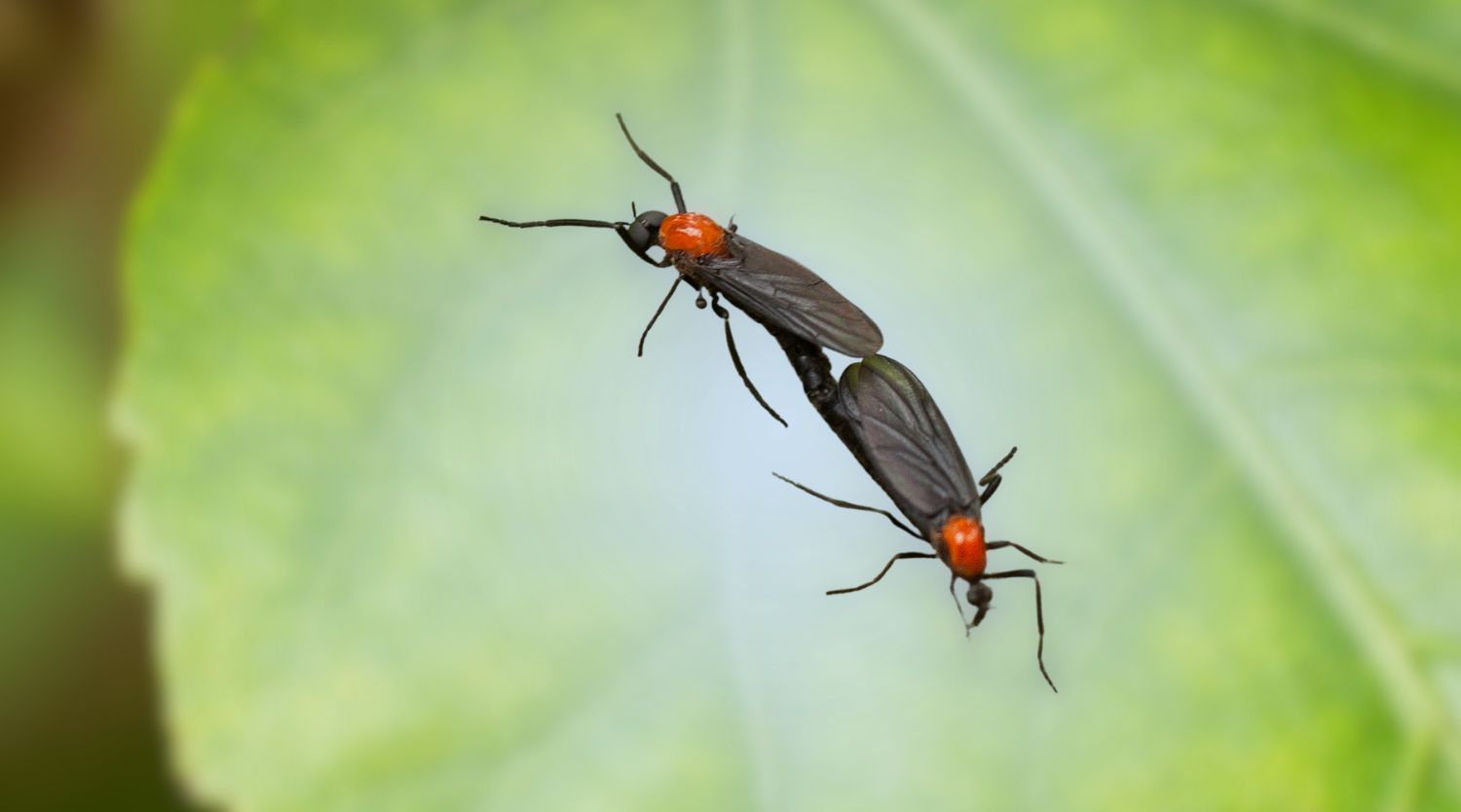
Lovebugs are a species of fly, not a beetle or a bug in the technical sense, with the scientific name Plecia nearctica. They’re easy to spot: small, black-bodied insects with a red to orange thorax, almost always seen flying in mating pairs attached at the rear, which is where the common name comes from.
They don’t bite, sting, or damage crops, and researchers describe them as a harmless nuisance rather than a genuine pest threat to people or pets. Their larvae actually play a helpful role, feeding on decaying plant matter in the soil as decomposers.
Why Do Lovebugs Swarm in Florida?
Lovebugs swarm because their entire population becomes adults at almost the same time, tied to natural mating cycles and environmental cues like heat, humidity, and even vehicle exhaust.
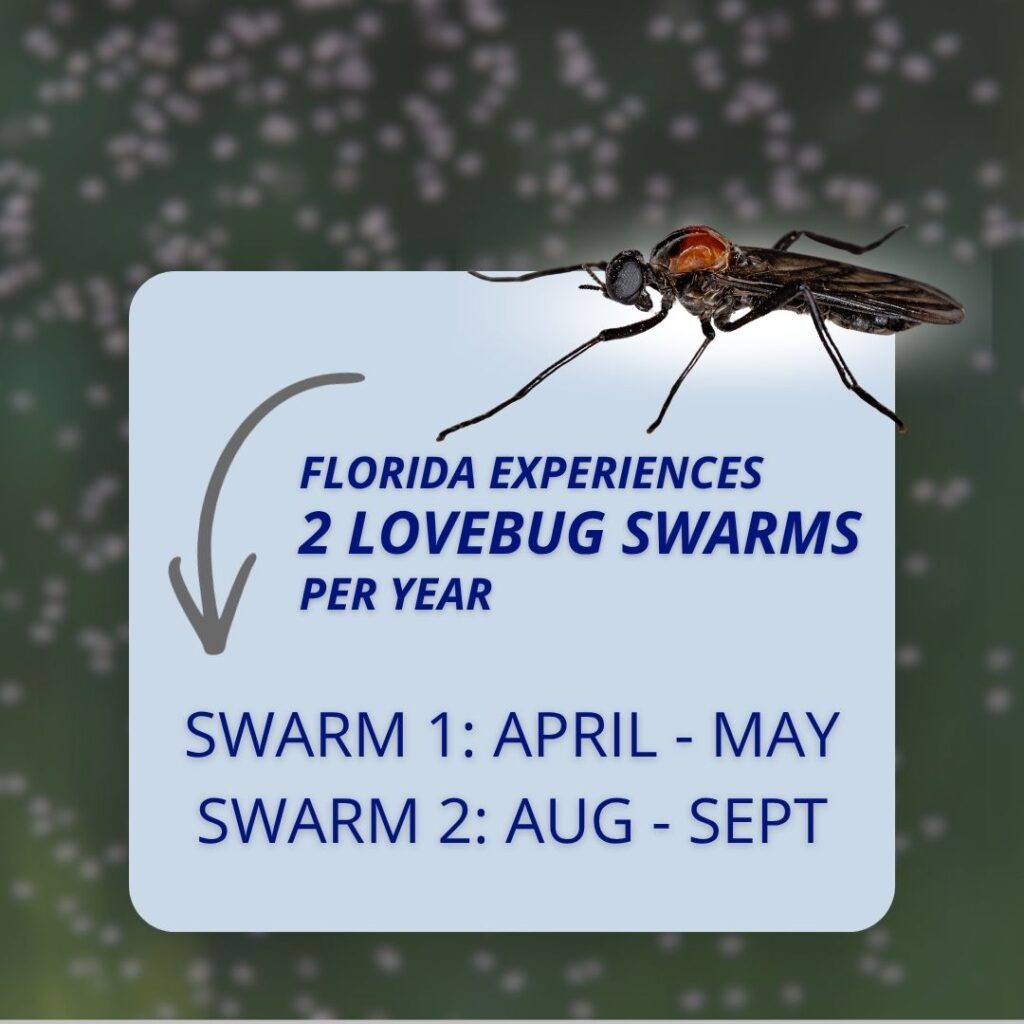
Florida typically sees two lovebug seasons a year: one in April and May, and another in August and September.
A few things drive where and how heavily they swarm:
- Mating swarms cluster low, usually one to five feet above ground, which puts them at exactly the wrong height for passing cars and highways
- Wind direction matters more than location. Adults are weak fliers, so they tend to blow downwind and pile up on buildings and vehicles as more arrive behind them
- Populations vary year to year. Florida experts have noted that lovebug numbers had been declining for several years before an unexpected rebound in the 2026 season, driven by favorable conditions earlier in their life cycle
Adult lovebugs only live a few days and are typically gone from any one area within a few weeks, which is why the swarms feel intense but temporary.
Why Lovebugs Are So Hard on Your Car
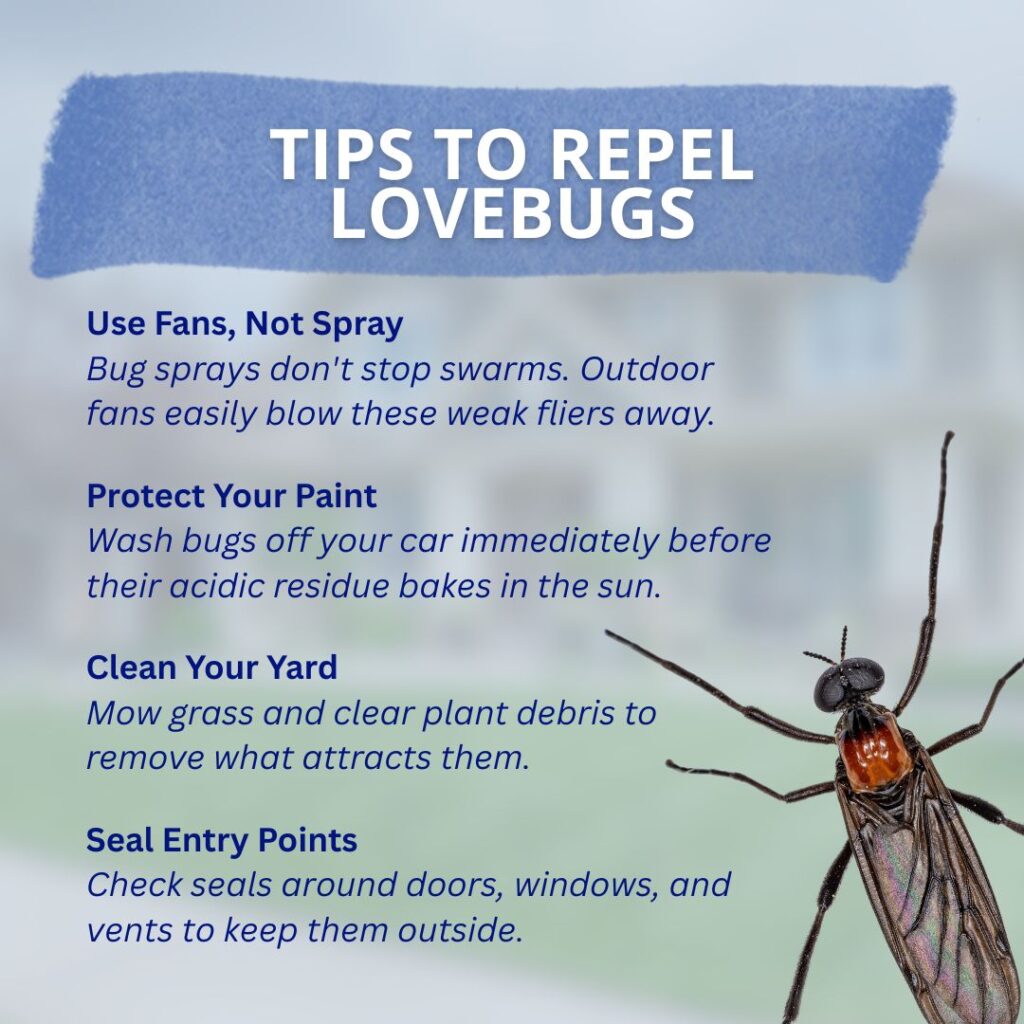
Lovebugs are more of a car problem than a home problem, and there’s a real chemical reason why. Their body chemistry is acidic, and when they’re crushed against a hot hood, grille, or windshield, that acidity can eat into paint and clear coat if it’s left to dry and bake in the sun. The longer the residue sits, the harder it is to remove and the more damage it can do.
That means timing matters as much as the cleaning itself:
- Clean lovebug residue off your car as soon as reasonably possible after a drive, rather than waiting
- Use windshield washer fluid proactively during heavy swarms instead of waiting for buildup to clear
- A damp cloth or a dryer sheet works well for stuck-on residue
- Avoid running your engine or parking with a hot hood in the middle of a dense swarm when you can help it, since heat plus lovebug body acid is the combination that damages paint fastest
How to Keep Lovebugs Away From Your Home and Car
Insecticide sprays are one of the least effective tools against lovebugs, and researchers indicate sprays only kill the bugs present at that moment, and more fly in from surrounding areas almost immediately. What actually helps:
- Use fans. Lovebugs are weak fliers, so ceiling fans, box fans, or portable outdoor fans create enough airflow to discourage them from landing or gathering on porches and patios
- Avoid peak hours when you can. Swarms are typically heaviest along roads in late morning and early afternoon during peak season
- Keep grass mowed and manage plant debris, since lovebugs are drawn to decaying vegetation and certain flowering plants like Brazilian pepper, goldenrod, and sweet clover
- Seal up entry points around windows, doors, and vents the same way you would for any other flying insect, even though lovebugs are more of an outdoor nuisance than an indoor infestation
Related Questions to Explore
- When is lovebug season in Florida? Florida generally sees two lovebug seasons each year: one in April and May, and another in August and September, though exact timing shifts slightly year to year based on weather.
- Do lovebugs bite or sting? No. Lovebugs don’t bite, sting, or carry disease. Their main impact is nuisance swarming and the mess they leave on cars, not any health risk.
- Does spraying insecticide get rid of lovebugs? Not effectively. Sprays only kill the lovebugs present at the moment of application, and more fly in from surrounding areas right away, so most pest experts recommend physical prevention (fans, cleanup, timing) over chemical treatment for this particular pest.
- Why do lovebugs like cars so much? It’s not the cars specifically. Lovebugs are drawn to warmth, certain exhaust compounds, and light-colored surfaces, and their mating swarms happen to cluster at the same low height as passing vehicles, especially along highways.
- How long does lovebug season last? Each swarm period generally runs a few weeks, since individual adult lovebugs only live a few days, but new adults continue emerging throughout the season, so the nuisance can feel constant even though no single bug survives long.
When to Call a Professional
Lovebugs themselves rarely require professional pest control since they’re outdoor, seasonal, and short-lived. But if you’re dealing with heavier or more persistent pest pressure around your home, whether that’s ants, mosquitoes, or general household pests, that’s where a broader pest prevention plan makes a difference.
Honor Services uses Integrated Pest Management to target the specific pests affecting your Melbourne-area property without spraying broadly. Learn more about our pest control services or reach out if lovebug swarms are just one part of a bigger seasonal pest picture at your home.
Conclusion
Lovebug season isn’t fun, but it’s predictable and short-lived. The takeaways:
- Lovebugs swarm twice a year in Florida, driven by mating cycles, not by anything you’re doing wrong
- They’re harmless to people and pets, but their acidic body chemistry can damage car paint if residue is left to dry
- Fans, quick cleanup, and timing beat insecticide sprays every time
If lovebugs are the least of your pest concerns this season, see how Honor Services’ pest prevention plans can help with the rest. Call us today!